

Tell us about the classification and structure of release paper. Release paper (also known as separator paper or release paper) is a type of paper with a release surface, typically achieved by coating with silicone oil or other release agents, providing the characteristic of "easy peeling". It is mainly used to carry adhesive materials (such as adhesive tape, self-adhesive, composite materials), serving as a barrier and protective layer, and is widely used in packaging, electronics, building materials, medical, and other fields.
1. The performance of release paper, categorized by substrate type, is largely determined by the substrate. Common substrates include: Kraft paper. The substrate of kraft paper release paper is kraft paper (domestic and imported, such as American kraft linerboard and Swedish kraft linerboard), which has high strength and tear resistance, suitable for bearing heavy-duty adhesive materials (such as construction tape and automotive foam tape).
Characteristics: The basis weight (paper thickness indicator) is typically 80-200g/㎡. Depending on the requirements, single-sided or double-sided silicone oil coating can be selected (double-sided release paper is used in scenarios where both sides need to be release-coated, such as the interlayer of double-sided adhesive tape).
The base material of copperplate paper release paper is copperplate paper (with a smooth and flat surface after coating and calendering), suitable for scenarios with high requirements for flatness (such as the surface material carrier for adhesive labels).
Features: Good surface glossiness, strong printing adaptability (printing patterns in advance before laminating with adhesive materials), with a basis weight of mostly 70-150g/㎡.
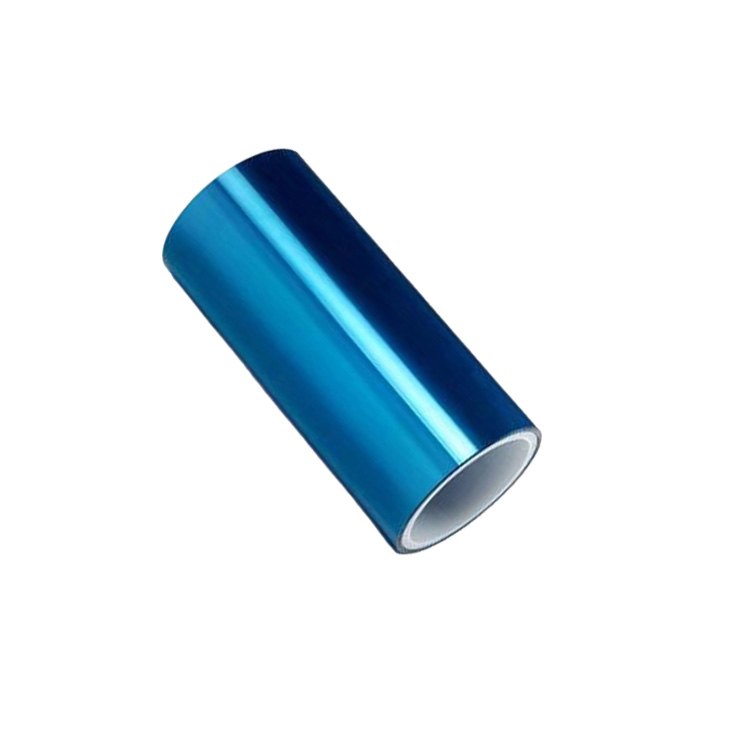
PET release film (broadly defined as release material) is made of PET film (polyester film). Although it is not paper, its function is similar to release paper, and it has superior temperature resistance and corrosion resistance, often classified as release material.
Features: Thickness ranging from 0.025 to 0.1mm, high temperature resistance (120-200℃), suitable for high-temperature processes in the electronics industry (such as tape protection for PCB boards).
Other special substrates: cellophane release paper: transparent and environmentally friendly, suitable for adhesive sealing stickers for food packaging; aluminum foil composite release paper: combining barrier properties and anti-adhesive properties, used for packaging of medicinal ointments (such as band-aids, ointment patches).
2. Based on peel force, peel force is the core indicator for measuring the anti-adhesive performance of release paper (referring to the force required for adhesive materials to peel off from release paper), with the unit of N/25mm. Common classification: light release: peel force ≤ 5g, suitable for low-adhesive materials (such as sticky notes and light-duty adhesive tape), easy to peel off without residue.
Medium release: release force 5-20g, suitable for medium-viscosity materials (such as ordinary adhesive labels, advertising stickers).
Heavy release: release force 20-50g, used for high-adhesive materials (such as strong adhesive tape, automotive foam adhesive), ensuring no detachment during transportation.
Extra-heavy release: Release force > 50g, for use in special scenarios (such as materials that need to maintain stability and load-bearing capacity even after high-temperature pressing).
3. The basic structure of release paper typically consists of three layers: the bottom layer is the substrate (such as kraft paper or copperplate paper), providing support and strength; the middle layer (optional) is a coating layer (such as PE coating), enhancing the flatness and sealing of the substrate and preventing silicone oil penetration; the top layer is the anti-adhesive coating (mainly composed of silicone oil, such as polydimethylsiloxane), forming a low surface energy layer to achieve anti-adhesive effects.