

What are the main factors determining the cost of coated paper? The cost of coated paper is influenced by various factors such as raw materials, production process, specification requirements, and market supply and demand. The weight of each factor varies depending on the product type (such as ordinary PE-coated paper, high-end PET-coated paper) and application scenario. Specifically, for coated paper, the first factor is raw material cost (accounting for 60%-80%, the core influencing factor). Raw materials constitute the main component of the cost of coated paper, including base paper and coated plastic: 1. Base paper cost Base paper accounts for 50%-70% of the raw material cost, and its price is determined by material type, basis weight, and quality grade: Material type: The price of virgin wood pulp paper (such as kraft paper, white cardboard) is higher than that of recycled paper (the cost of recycled paper is about 60%-80% of that of virgin paper), but it has better strength and print adaptability; specialty paper (such as food-grade sterile paper, high-temperature resistant paper) is 1.5-3 times more expensive than ordinary paper due to its complex process (for example, food-grade white cardboard is about 8,000 yuan/ton, while ordinary white cardboard is about 5,000 yuan/ton).
Basis weight (thickness): The higher the basis weight (the thicker the paper), the higher the cost per unit area. For example, recycled paper with a basis weight of 60g/m² costs about 3,000 yuan/ton, while that with a basis weight of 120g/m² costs about 5,000 yuan/ton (this is not simply a doubling, as the production of thicker paper requires more energy).
Quality indicators: The higher the stiffness, bursting strength, whiteness, and other indicators, the higher the price of the base paper. For example, high-whiteness copperplate paper (whiteness ≥90%) is 20%-30% more expensive than ordinary white cardboard.
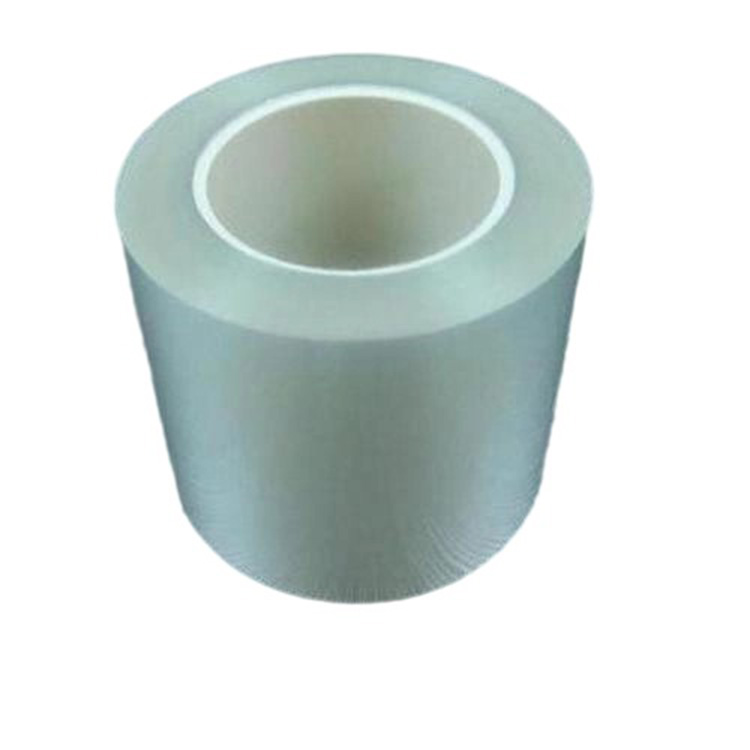
2. Cost of Laminated Plastics: Laminated plastics account for 30%-50% of the raw material cost, with prices depending on the type of plastic, purity, and environmental properties. Plastic types: Regular polyethylene (PE) has the lowest cost (approximately 8,000-12,000 yuan/ton) and is the mainstream choice; polypropylene (PP) has a 10%-20% higher price than PE due to its better high-temperature resistance; polyethylene terephthalate (PET) and special functional plastics (such as EVOH high-barrier films) are priced 2-5 times higher than PE (PET is approximately 20,000-30,000 yuan/ton); due to capacity constraints, degradable plastics (such as polylactic acid (PLA) and polybutylene adipate terephthalate (PBAT)) are priced 3-4 times higher than regular PE (PLA is approximately 30,000-40,000 yuan/ton).
Lamination thickness: As the thickness increases from 0.01mm to 0.1mm, the amount of plastic used per unit area increases tenfold, resulting in a corresponding increase in cost (for example, a 0.03mm PE lamination increases the cost by approximately 0.05 yuan/m², while a 0.1mm lamination increases the cost by 0.15-0.2 yuan/m²).
II. Production Process Cost (accounting for 10%-20%) The complexity of the production process directly affects the processing cost, which mainly includes lamination processing fees, pretreatment, and post-processing fees: 1. Lamination Processing Fees Lamination Method: The processing fee for ordinary extrusion lamination (single layer) is approximately 500-1000 yuan/ton; for multi-layer co-extrusion lamination (such as PE+PP composite), due to high equipment requirements, the processing fee increases to 1500-3000 yuan/ton.
Production efficiency: High-speed lamination lines (speed > 300m/min) have low unit energy consumption, and the processing cost is 20%-30% lower than that of low-speed lines (<100m/min).
Scrap rate: Novice operation or poor material compatibility (such as excessive moisture content in the base paper causing blistering of the laminating film) can increase the scrap rate (the normal scrap rate is less than 3%, and for every 1% increase in scrap rate beyond the standard, the cost increases by 1%-2%).
2. Pre-treatment and post-processing fees: Base paper pre-treatment: Food-grade laminated paper requires sterile treatment (such as ultraviolet sterilization), with a cost increase of 0.02-0.05 yuan/m²; base paper with a rough surface requires grinding treatment, with a processing fee increase of 10%-15%.
Post-processing steps: printing (color printing is 30%-50% more expensive than monochrome printing), die-cutting (special-shaped die-cutting is 50% more expensive than straight-line cutting), and silicone oil coating for silicone oil paper (adding 0.1-0.3 yuan/m²), all of which will drive up costs.
III. Specifications and Customization Requirements (Key Variables of Cost Fluctuation) The cost of coated paper fluctuates significantly with changes in size, batch size, and special functions: 1. Size and Batch Size Small-batch customization: When the order quantity is less than 1 ton, the cost of equipment debugging and material changing is high, and the unit cost is 30%-50% higher than that of large batches (>10 tons) (for example, the processing fee for a 1-ton order is about 2,000 yuan/ton, while it can be reduced to 800 yuan/ton for a 10-ton order).
Special dimensions: Non-standard widths (such as widths exceeding 1.6 meters or widths narrower than 0.3 meters) require adjustments to the production line, resulting in a cost increase of 20%-40%.
2. Special functional requirements necessitate environmental certification: The cost of testing and certification for coated paper that has passed certifications such as FDA (food contact) and BPI (biodegradable) increases the cost by 5%-10%.
Functional coating: Special coatings such as oil-resistant, antibacterial, and high-temperature resistant coatings. Each additional functional layer increases the cost by 0.05-0.2 yuan/m² (for example, oil-resistant laminated paper is 15%-25% more expensive than ordinary laminated paper).
IV. Other costs (accounting for 5%-10%): Transportation and warehousing: Both base paper and finished products are bulk goods. For every 1000 kilometers increase in transportation distance, the cost increases by 50-100 yuan/ton. If the storage time exceeds 3 months, due to the risk of moisture absorption by paper and aging of plastic, the inventory cost increases by 3%-5%.
Market supply and demand: The price of plastic raw materials (such as PE) is influenced by fluctuations in crude oil prices (a 10% increase in crude oil prices leads to an approximate 5%-8% increase in PE costs). During peak seasons (such as the food packaging peak season in Q4), orders surge, potentially resulting in a 10%-20% increase in processing fees.