

Coating-free release process (specially designed for extreme environments) Some substrates inherently possess low surface energy, enabling release without the need for additional coatings, making them suitable for extreme environments (high temperature, strong corrosion).
1. Principle of fluoroplastic substrates (such as PTFE, FEP): The molecular chain of polytetrafluoroethylene (PTFE) is composed entirely of C-F bonds, with a surface energy of only 18mN/m, inherently possessing release properties and exhibiting excellent temperature resistance (long-term temperature resistance up to 260℃, and short-term temperature resistance above 300℃).
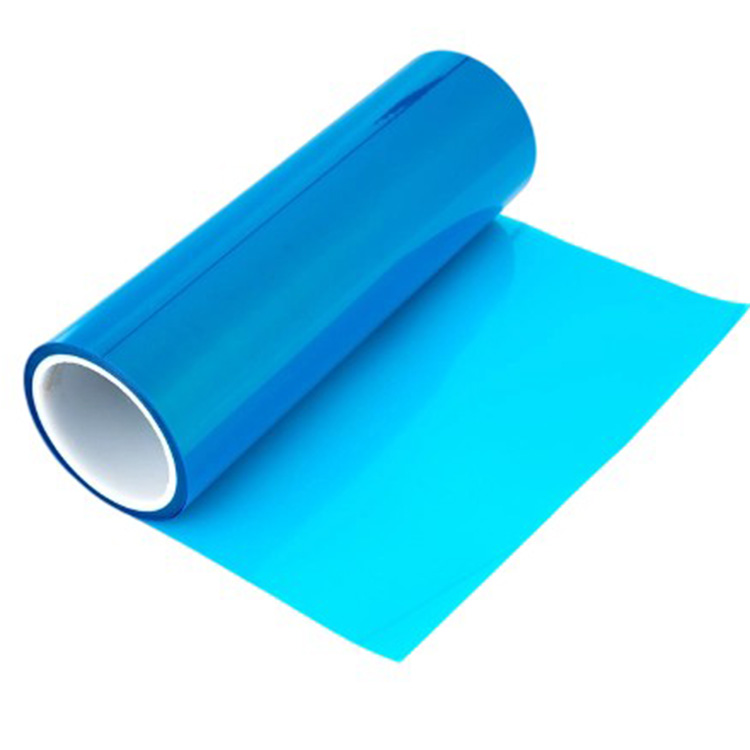
Process: The film is formed through extrusion or calendering, and its surface undergoes electric spark treatment (slight roughening to avoid "slip" caused by excessive smoothness).
Applications: High-temperature composite material molding (such as carbon fiber hot pressing), strong corrosive environments (such as chemical pipeline lining).
2. Principle of ultra-high molecular weight polyethylene (UHMWPE): The molecular chain is long and tightly entangled, with a smooth surface (friction coefficient 0.05-0.1) and weak adsorption to adhesives.
Process: Sintering (high-temperature sintering after powder compaction), no surface treatment required, direct use.
Performance: Resistant to low temperatures (-196℃) and impact, but poor in temperature resistance (≤80℃), suitable for low-temperature release scenarios (such as frozen food packaging).
IV. Selection Basis Core Principles for Selection: Prioritize Pollution Avoidance: Electronic components (such as PCBs, OLEDs), and optical films should be selected using non-silicon processes (fluorine or polyolefin) to prevent silicon migration, which can lead to poor soldering or degradation of optical performance; Adapt to Strong Adhesive Glues: Strong adhesive substances such as silicone glue and hot melt adhesive require fluorine coatings or fluoroplastic substrates (release force < 30g/in); High-Temperature Scenarios: For hot pressing molding (such as flexible screen processing), fluorine coatings (200°C) or PTFE substrates (above 260°C) are preferred; Cost-Sensitive Scenarios: For general packaging and adhesive tape backing paper, silicone oil coatings are preferred (best cost-performance ratio).
V. Key Points of Process Quality Control: Coating Uniformity: Monitor the coating thickness using an online thickness gauge (accuracy ±0.1μm) to avoid local over-thickness (excessive release force) or under-thickness (unstable release force); Curing Degree: For silicone oil processes, detect the crosslinking degree using infrared spectroscopy (≥90%, otherwise delamination is prone to occur); for fluorine processes, ensure the fluorine content (X-ray fluorescence analysis, fluorine element ratio ≥30%); Release Force Stability: The deviation in release force for products of the same batch should be ≤±10% (detected using a peel tester according to ASTM D3359 standard).