

Could you elaborate on the surface release treatment process of release film? The surface release treatment process of release film is a crucial step in determining its core performance characteristics of "low tack and easy release". By constructing a functional coating or modified layer with low surface energy on the substrate surface, it achieves isolation and controlled release of sticky substances (such as adhesives and resins). The principles, application scenarios, and performance differences of different processes are significant. The following provides a detailed introduction from mainstream process types, technical details, performance comparisons, and application scenarios: Release Film 1. Silicone Oil Coating Process (mainstream, accounting for over 80% of the market) Silicone oil coating is currently the most widely used release treatment process. It achieves the release effect by coating silicone resin (silicone oil) on the substrate surface, utilizing the low surface energy characteristics of siloxane bonds (surface tension 20-25mN/m).
1. Process principle: Silicone resin (such as polydimethylsiloxane) contains a large number of methyl groups (-CH₃) in its molecular structure, which is non-polar. It has poor compatibility with polar adhesives (such as acrylic adhesive) and weak intermolecular forces, thus forming an "easy-to-peel" interface. By adjusting the molecular weight of silicone oil, crosslinking density, and coating thickness, the peel force (5-500g/in) can be precisely controlled.
2. Key step: substrate pretreatment. The surface of the substrate (such as PET and PE films) needs to undergo corona treatment (to increase the surface tension to 38-42mN/m) or be coated with a primer (such as polyurethane primer) to ensure the adhesion between the silicone oil coating and the substrate (to avoid delamination in the later stage).
Silicone oil formulation: Mix base silicone oil (such as linear silicone oil) with crosslinking agent (such as hydrogen-containing silicone oil) and catalyst (such as platinum catalyst) in proportion (crosslinking agent accounts for 1%-3%, catalyst 0.1%-0.5%), control the viscosity (20-50cps, ensuring uniform coating).
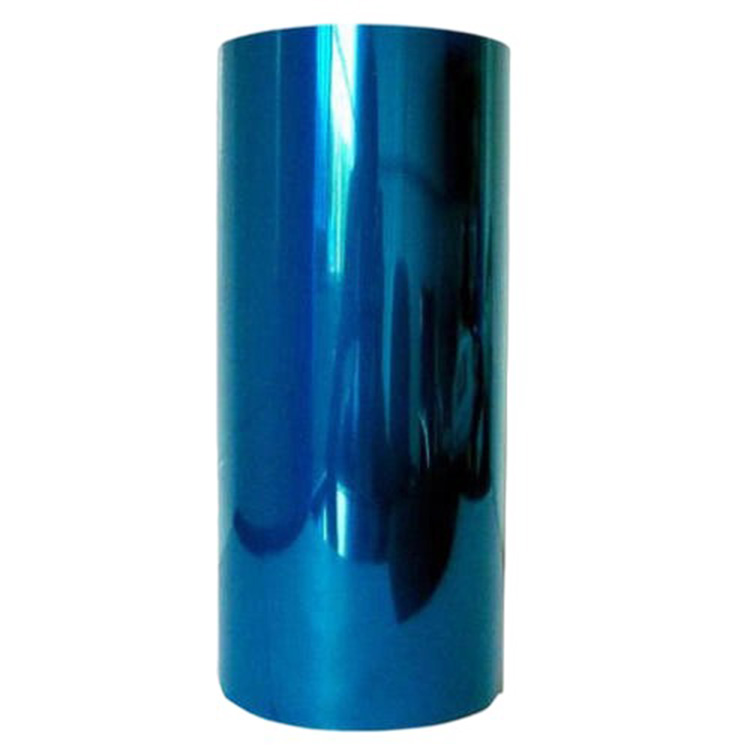
Coating method: Select based on substrate thickness and precision requirements: Micro-gravure coating: suitable for thin coatings (0.1-1μm), high precision (coating deviation ≤±5%), used for electronic-grade release films; Comma blade coating: suitable for medium to thick coatings (1-5μm), high efficiency, used for packaging-grade release films; Slit coating: suitable for high-precision scenarios (such as optical films), with coating uniformity up to ±1%.
Curing and crosslinking: Silicone oil molecules are crosslinked and film-formed through hot-air drying (80-120°C, 1-3 minutes) or UV irradiation (wavelength 365nm, energy 800-1500mJ/cm²), resulting in a stable three-dimensional network structure (enhancing heat resistance and solvent resistance).
3. Performance characteristics and advantages: Wide adjustable range of release force (5-500g/in), moderate cost, mature technology, compatibility with most substrates (PET, PE, PP, etc.); limitations: potential migration of silicon molecules (contamination of adherends, such as solder pads of electronic components, optical films), moderate temperature resistance (long-term temperature resistance ≤150℃).
II. Non-silicon release processing technology (alternative solution for high-precision scenarios) addresses the "silicon migration" defect of the silicone oil process. The non-silicon process utilizes non-silicon materials such as fluorocarbons and polyolefins to avoid silicon contamination, making it suitable for high-cleanliness scenarios such as electronics and optics.
1. Principle of fluorine coating process: Utilizing the ultra-low surface energy (10-15mN/m, lower than silicone oil) of fluorine-containing polymers (such as polytetrafluoroethylene derivatives, fluorocarbon resins) to form stronger anti-adhesion properties, especially suitable for isolating strong adhesive glues (such as silicone glue, hot melt adhesive).
Key steps: Substrate pretreatment: Requires high-temperature plasma treatment (to enhance surface roughness and improve the adhesion of the fluorine coating); Fluororesin coating: Utilizes spray coating or dip coating (fluororesin solution concentration 5%-10%), with a curing temperature of 150-200℃ (to arrange fluorine atoms into a dense hydrophobic layer).
Performance: Extremely low release force (1-30g/in), excellent temperature resistance (long-term temperature resistance 200-260℃), chemical corrosion resistance (acid and alkali resistance, solvent resistance), but high cost (3-5 times that of silicone oil process).
2. Principle of polyolefin modification process: By co-extruding or coating low crystallinity polyolefins (such as metallocene polyethylene) on the surface of the substrate, the non-polar molecular structure is utilized to achieve weak adhesion, suitable for light release scenarios.
Key steps: Co-extrusion molding: Blend polyolefin with the substrate (such as PP) in an extruder to directly form a composite film (without additional coating); Surface calendering: Control the temperature of the cooling roller (50-80°C) to ensure the polyolefin layer is smooth (thickness 1-3μm).
Performance: Light release force (5-50g/in), no migration risk, lower cost compared to fluorine-based processes, but poor temperature resistance (≤80℃), suitable only for room temperature scenarios (such as food packaging).