

PP Protective Film: Properties, Types, and Industrial Applications
PP Protective Film, short for Polypropylene Protective Film, is a specialized polymeric material engineered to shield surfaces of products from damage, contamination, or wear during manufacturing, storage, transportation, and installation. Unlike conventional packaging materials that focus solely on containment, this film forms a temporary, removable barrier that adheres lightly to substrates—such as metals, plastics, glass, or composites—without leaving residues or damaging the underlying surface. Its unique combination of flexibility, transparency, and customizable adhesion makes it a versatile solution across industries ranging from electronics and automotive to construction and consumer goods. From protecting the glossy finish of a new smartphone to preserving the integrity of construction materials like aluminum panels, PP Protective Film plays a critical role in maintaining product quality and reducing post-production defects.
Core Material Properties of PP Protective Film
The effectiveness of PP Protective Film stems from its key material characteristics, which balance protection, usability, and compatibility:
Controlled Adhesion: PP Protective Film features low to moderate adhesion (5–50 g/in), ensuring it stays securely on the substrate during handling but peels off easily without leaving sticky residues or damaging surface coatings. Adhesion levels are tailored to the substrate—lower adhesion for delicate surfaces (e.g., matte plastics, painted metals) and higher adhesion for rough or textured surfaces (e.g., concrete, industrial machinery).
Mechanical Durability: It exhibits excellent tensile strength (18–30 MPa) and tear resistance, withstanding impacts, friction, and stretching during transportation or installation. Its flexibility (elongation at break: 150–300%) allows it to conform to curved or irregular surfaces (e.g., automotive bumpers, plastic housings) without cracking or lifting.
Transparency: Most PP Protective Films offer high light transmittance (85–95%), enabling visual inspection of the protected surface (e.g., checking for scratches on glass, verifying product labels) without removing the film. Matte variants are also available for applications where glare reduction is needed (e.g., display screens, automotive windshields).
Environmental Resistance: It is resistant to water, moisture, dust, and mild chemicals (e.g., detergents, oils), protecting substrates from corrosion, staining, or contamination. UV-stabilized variants can withstand prolonged outdoor exposure (6–12 months) without yellowing or degradation, making them suitable for construction materials or outdoor equipment.
Cost-Effectiveness: Compared to protective films made from specialty polymers (e.g., PET, PVC), PP Protective Film offers a lower cost per square meter while meeting the protection needs of most mainstream applications, making it ideal for high-volume production.
Types of PP Protective Film
PP Protective Film is categorized based on adhesion level, surface finish, and functional enhancements, each designed for specific application requirements:
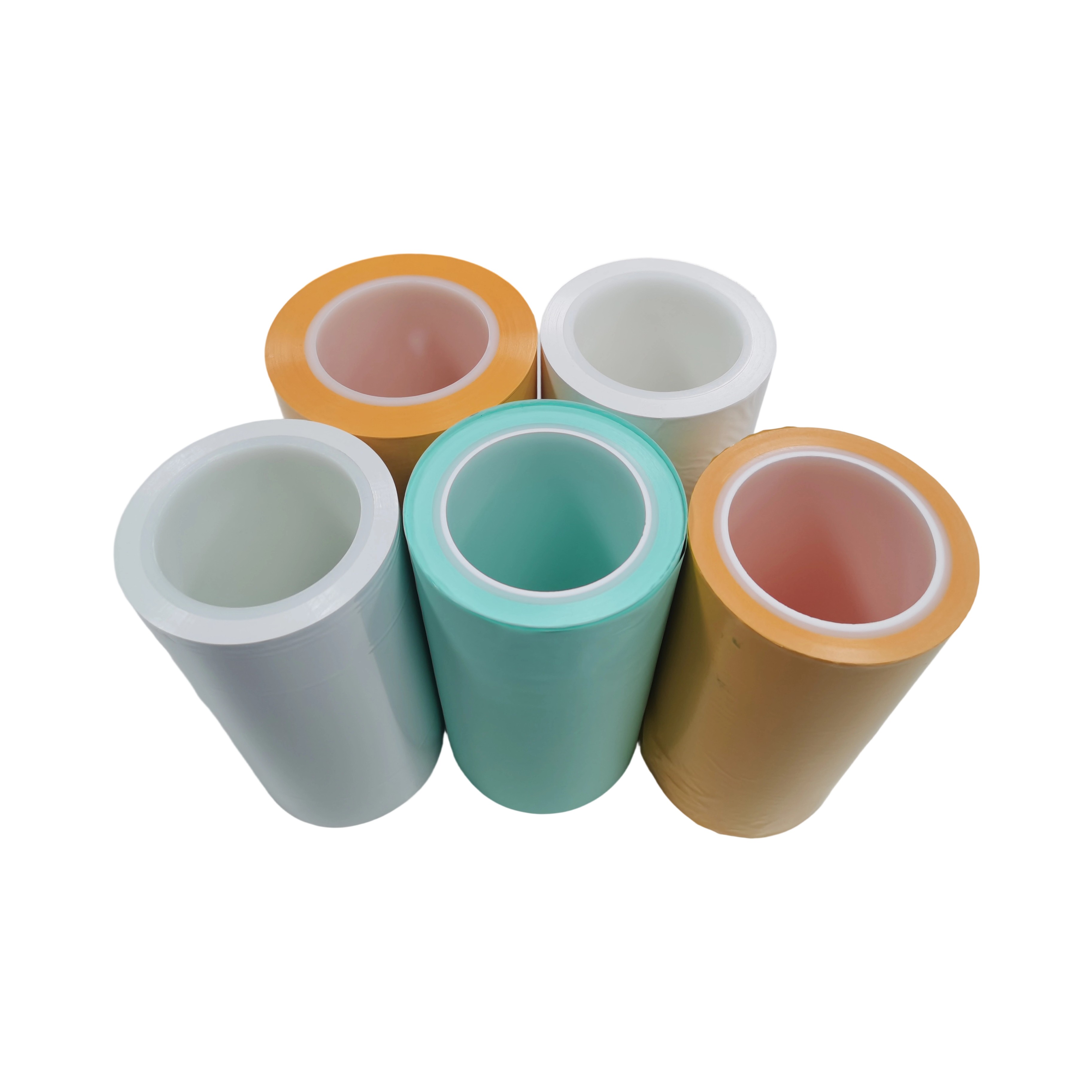
1. By Adhesion Level
Low-Adhesion PP Protective Film (5–15 g/in): Designed for delicate surfaces such as matte plastics, painted metals, or optical components (e.g., camera lenses, OLED screens). It prevents surface damage or coating peeling during removal, making it suitable for consumer electronics, luxury goods, and precision machinery.
Medium-Adhesion PP Protective Film (15–30 g/in): The most versatile type, used for smooth or slightly textured surfaces like glass, aluminum sheets, and plastic housings. It balances secure adhesion and easy removal, common in automotive parts (e.g., door panels, mirrors), construction materials (e.g., window glass, ceramic tiles), and household appliances.
High-Adhesion PP Protective Film (30–50 g/in): For rough, porous, or high-surface-energy substrates such as concrete, industrial metal parts, or fiberglass composites. It ensures the film stays in place during heavy handling or outdoor storage, ideal for construction machinery, shipping containers, and large industrial components.
2. By Surface Finish
Clear PP Protective Film: High-transparency film for applications requiring visual inspection, such as display screens, glass panels, or product packaging. It maintains the substrate’s appearance while providing protection.
Matte PP Protective Film: Features a non-glossy surface that reduces glare and fingerprints, suitable for touchscreens, automotive interiors, and furniture surfaces where aesthetics and usability are critical.
Colored PP Protective Film: Tinted or opaque variants (e.g., blue, black, white) used for color-coding (e.g., identifying different product batches) or concealing sensitive components (e.g., industrial parts with proprietary designs).
3. By Functional Enhancements
UV-Stabilized PP Protective Film: Infused with UV inhibitors to resist yellowing, brittleness, or degradation under sunlight. Used for outdoor applications like construction materials (e.g., aluminum composite panels, vinyl siding) or agricultural equipment.
Anti-Static PP Protective Film: Coated with anti-static agents to prevent electrostatic discharge (ESD), protecting electronic components (e.g., PCBs, semiconductor wafers) from dust attraction or ESD damage during manufacturing and storage.
Scratch-Resistant PP Protective Film: Reinforced with a hard coating (e.g., acrylic, silicone) to enhance scratch resistance, suitable for high-wear surfaces such as automotive paint, smartphone casings, or furniture.
Manufacturing Process of PP Protective Film
The production of PP Protective Film involves precise, automated steps to ensure consistent adhesion, durability, and quality:
Resin Melting and Extrusion: Polypropylene resin (homopolymer for stiffness, copolymer for flexibility) is melted in an extruder at 190–230°C. The molten resin is forced through a flat die to form a continuous PP film, which is cooled rapidly using chilled rollers to solidify its structure and maintain dimensional stability.
Adhesive Coating (Optional): For films requiring enhanced adhesion, a thin layer of pressure-sensitive adhesive (PSA)—typically acrylic or rubber-based—is applied to one surface using precision coating techniques. Gravure coating is used for thin, uniform adhesive layers (1–3 μm), while slot-die coating is preferred for thicker layers (3–5 μm) or high-volume production. Adhesion levels are controlled by adjusting the adhesive formulation and coating thickness.
Surface Treatment: The film undergoes corona or plasma treatment to improve surface properties—either enhancing adhesive adhesion (for coated films) or modifying surface energy (for uncoated films) to ensure compatibility with the substrate. UV-stabilized or anti-static films receive additional treatments, such as UV inhibitor infusion or anti-static coating application.
Slitting and Rewinding: The continuous film is slit into custom widths (10 mm–2 m) using precision slitting machines, tailored to customer specifications (e.g., 50 mm for smartphone screens, 1.2 m for aluminum panels). The slit films are rewound onto paper or plastic cores with controlled tension (5–10 N/m) to prevent wrinkling or stretching, ensuring easy handling during use.
Quality Control: Throughout the process, quality checks are conducted to verify adhesion level (using peel force meters), transparency (via light transmittance testing), durability (tear and tensile strength tests), and residue-free performance (peel tests on sample substrates). Defects such as pinholes, wrinkles, or uneven coating are identified and rejected to ensure product quality.
Industrial Applications of PP Protective Film
PP Protective Film’s versatility makes it indispensable across diverse sectors, addressing unique surface protection challenges:
1. Electronics Industry
Consumer Electronics: Low-adhesion clear PP Protective Film protects smartphone screens, laptop casings, and tablet displays from scratches, dust, or fingerprint contamination during manufacturing, shipping, and retail display. Anti-static variants are used for PCBs, semiconductor wafers, and LED components, preventing ESD damage or dust attraction.
Appliances: Medium-adhesion film shields the surfaces of refrigerators, washing machines, and ovens from scratches during transportation or installation. Matte variants are used for control panels to reduce glare and maintain usability.
2. Automotive Industry
Automotive Parts: High-adhesion PP Protective Film protects painted surfaces (e.g., car bodies, bumpers), windows, and mirrors from stone chips, dust, or chemical stains during shipping and assembly. UV-stabilized variants are used for outdoor-stored parts (e.g., truck beds, automotive trim) to prevent paint fading.
Interior Components: Low-adhesion matte film safeguards dashboard surfaces, seat upholstery, and door panels from scratches or wear during vehicle production and delivery, ensuring the interior remains in pristine condition for the end user.
3. Construction and Building Materials
Glass and Glazing: Clear PP Protective Film protects window glass, mirrors, and glass partitions from scratches or breakage during construction, installation, or renovation. It is removed after the project is completed, revealing a flawless surface.
Metal and Composite Materials: Medium to high-adhesion film shields aluminum sheets, stainless steel panels, and fiber cement boards from corrosion, staining, or impact damage during transportation or on-site storage. UV-stabilized variants withstand outdoor exposure during construction delays.
4. Consumer Goods and Packaging
Furniture and Home Decor: Matte PP Protective Film protects wooden furniture, laminate flooring, and ceramic tiles from scratches, spills, or dust during moving or home renovation. It is easy to remove and leaves no residues, preserving the product’s appearance.
Packaging: Thin PP Protective Film is used as a liner for product packaging (e.g., toy boxes, electronics packaging) to prevent scratches on the product surface during storage or shipping. It can also be printed with branding or handling instructions for added functionality.
Market Trends and Future Innovations
The global PP Protective Film market is growing steadily, driven by demand from electronics, automotive, and construction industries. Key trends shaping its evolution include:
Sustainability: Manufacturers are developing eco-friendly variants, such as bio-based PP Protective Film (blended with PLA or other plant-derived polymers) and recyclable adhesives. These innovations reduce reliance on fossil fuels and enable the film to be recycled within existing PP recycling streams, aligning with global sustainability goals (e.g., EU Circular Economy Action Plan).
High-Performance Enhancements: Advancements in adhesive technology are enabling PP Protective Film to adhere to ultra-delicate surfaces (e.g., 3D-printed parts, thin-film electronics) without damage. Scratch-resistant coatings with enhanced durability (up to 3H pencil hardness) are also being developed for high-wear applications like automotive paint or smartphone casings.
Customization: There is a growing demand for tailored solutions, including films with variable adhesion levels (e.g., removable for temporary protection, permanent for long-term storage), custom prints (branding, warning labels), or multi-functional layers (e.g., anti-static + UV-stabilized). Manufacturers are offering die-cutting services to create film shapes that match specific product dimensions (e.g., smartphone camera lenses, automotive door handles).
Smart Integration: Emerging technologies involve embedding RFID tags or sensors into PP Protective Film, enabling real-time tracking of product location, storage conditions (temperature, humidity), or tamper detection. This is particularly valuable for high-value products (e.g., luxury electronics, medical devices) where traceability and security are critical.
In conclusion, PP Protective Film is a cost-effective, versatile material that plays a vital role in protecting products across the value chain. Its controlled adhesion, durability, and compatibility with diverse substrates make it adaptable to countless applications, from consumer electronics to construction materials. As industries continue to prioritize product quality, sustainability, and customization, ongoing innovations in materials and manufacturing will further expand the capabilities of PP Protective Film, solidifying its position as a key enabler of efficient, high-quality production worldwide.