

PP Silicone-coated Film: Structure, Performance, and Industrial Applications
PP Silicone-coated Film, short for Polypropylene Silicone-coated Film, is a specialized polymeric material that combines the mechanical versatility of polypropylene (PP) with the ultra-low surface energy of silicone coatings. Unlike conventional PP films, this variant features a thin, uniform layer of silicone applied to one or both surfaces, creating a non-stick, residue-free interface that resists adhesion to adhesives, resins, viscous liquids, and sticky solids. Its unique blend of PP’s cost-effectiveness, flexibility, and thermal stability with silicone’s chemical inertness and low adhesion makes it a critical solution across industries such as packaging, electronics, medical devices, and composite manufacturing. From serving as a release liner for adhesive tapes to protecting delicate surfaces during high-temperature processing, PP Silicone-coated Film addresses unmet needs in applications requiring reliable non-stick performance and substrate compatibility.
Core Structure and Key Performance Traits
The functionality of PP Silicone-coated Film is defined by its layered structure and the synergistic properties of its components:
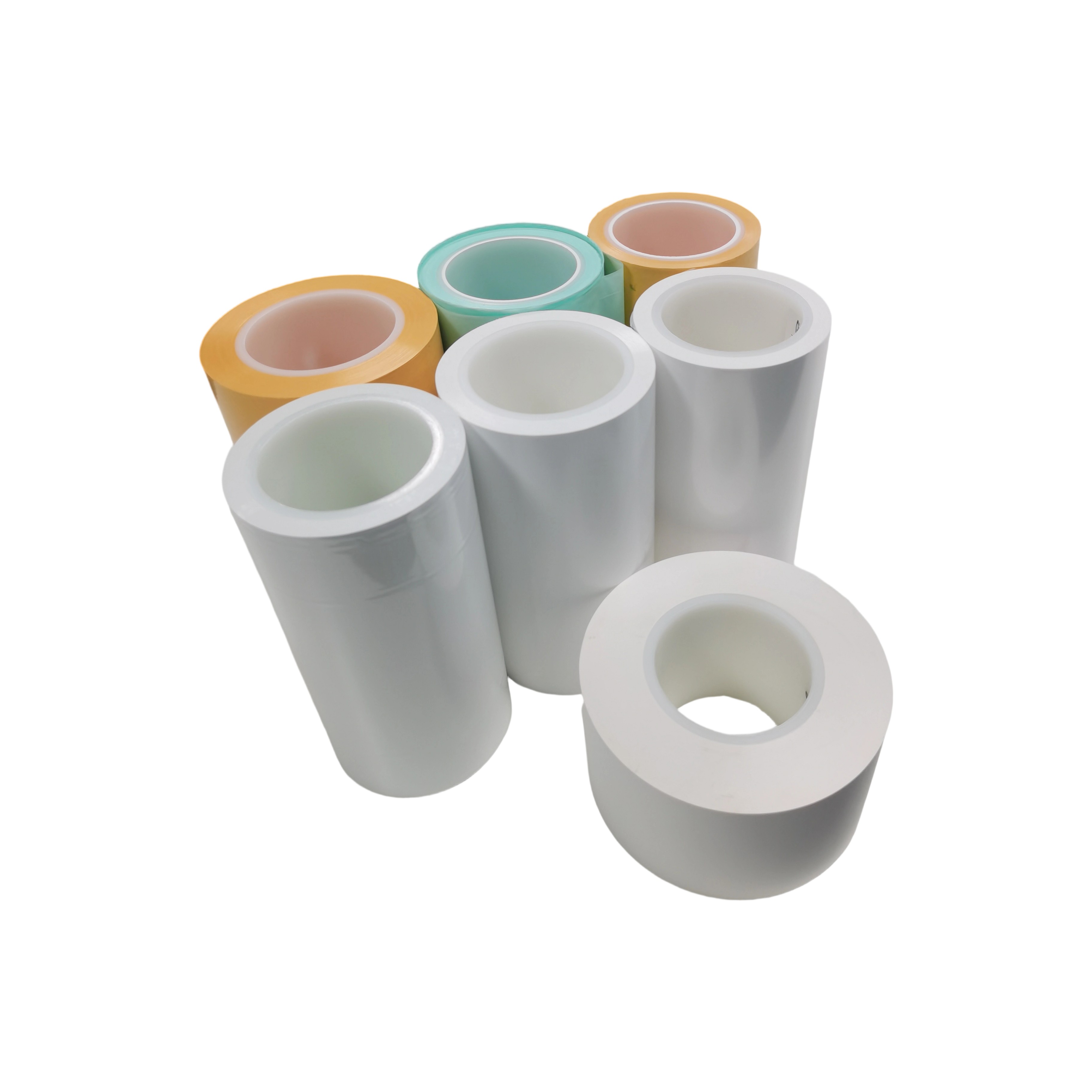
PP Substrate Layer: The base is typically made from Biaxially Oriented Polypropylene (BOPP) or Cast Polypropylene (CPP). BOPP substrates offer exceptional dimensional stability (thermal expansion coefficient: 15–20 μm/m·°C), tensile strength (25–40 MPa), and thermal resistance (up to 130°C), making them ideal for industrial processes like composite curing. CPP substrates are softer, more conformable, and tolerate temperatures up to 90°C, suitable for low-temperature packaging or flexible applications.
Silicone Coating Layer: A thin layer (1–5 μm) of silicone resin—either solvent-based, water-based, or solvent-free—is applied to the PP substrate. Silicone reduces the film’s surface energy to 22–28 dynes/cm (compared to uncoated PP’s 29–32 dynes/cm), enabling consistent release from high-tack adhesives (acrylic, rubber, silicone) with customizable release forces (5–35 g/in). The coating also enhances chemical resistance, protecting the film from oils, solvents, and mild acids/bases, and improves thermal stability, allowing BOPP-based variants to withstand short-term exposure up to 150°C.
Interface Bonding: To prevent coating delamination, the PP substrate undergoes corona or plasma pre-treatment, raising its surface energy to 38–42 dynes/cm. This ensures the silicone coating adheres with a strength of ≥1.5 N/mm, even during winding, unwinding, or high-temperature processing—a critical requirement for long-term performance.
Key performance traits of PP Silicone-coated Film include:
Residue-Free Release: The silicone coating ensures no sticky residues remain on the substrate after film removal, critical for sensitive applications like medical dressings or electronic component protection.
Uniformity: Advanced coating techniques (e.g., gravure, slot-die) deliver a coating thickness tolerance of ±0.3 μm, ensuring consistent release force and surface energy across the film’s entire area.
Flexibility: The film retains PP’s inherent flexibility (elongation at break: 150–300%), conforming to curved or irregular surfaces without cracking or lifting.
Cost-Effectiveness: Compared to silicone-coated films made from specialty polymers (e.g., PET, PTFE), PP Silicone-coated Film offers a 30–50% lower cost per square meter, making it ideal for high-volume production.
Types of PP Silicone-coated Film
PP Silicone-coated Film is categorized based on coating location, release force, and functional enhancements, each tailored to specific application needs:
1. By Coating Location
Single-sided PP Silicone-coated Film: Silicone is applied to only one surface, while the uncoated side retains PP’s natural properties (e.g., moderate surface energy for adhesion to substrates like paper or metal). This type is widely used as a release liner for single-sided adhesive tapes, self-adhesive labels, and medical dressings, where only one-sided non-stick performance is required.
Double-sided PP Silicone-coated Film: Silicone coats both surfaces, delivering dual-sided release functionality. It is used for multi-layer adhesive assemblies (e.g., double-sided foam tapes), composite laminates, and battery separator protection, eliminating the need for multiple film layers and reducing production complexity.
2. By Release Force
Light-release (5–10 g/in): Designed for delicate substrates like optical films, OLED screens, or thin medical tapes. It ensures easy film removal without damaging the underlying material.
Medium-release (10–20 g/in): The most versatile type, used for standard adhesive tapes, packaging seals, and composite curing. It balances secure adhesion during storage with easy removal during application.
Heavy-release (20–35 g/in): For high-tack adhesives (e.g., structural adhesives, automotive bonding tapes) or applications requiring long-term storage. It prevents premature film detachment while remaining removable without residue.
3. By Functional Enhancements
UV-Stabilized PP Silicone-coated Film: Infused with UV inhibitors to resist yellowing or brittleness under sunlight. Used for outdoor applications like solar panel backsheets, outdoor adhesive labels, or construction material protection.
Anti-Static PP Silicone-coated Film: Coated with anti-static agents (in addition to silicone) to prevent electrostatic discharge (ESD). Suitable for electronic components (e.g., PCBs, semiconductor wafers), where ESD could damage sensitive parts or attract dust.
High-Temperature Resistant PP Silicone-coated Film: Formulated with heat-resistant silicone resins, enabling BOPP-based variants to withstand continuous exposure up to 150°C. Used in high-temperature processes like composite curing, automotive paint baking, or industrial lamination.
Manufacturing Process of PP Silicone-coated Film
Producing PP Silicone-coated Film requires precise, automated processes to ensure coating quality and performance consistency:
Substrate Preparation: The PP base film (BOPP or CPP) is unwound and undergoes ultrasonic cleaning to remove dust, oils, or contaminants. BOPP substrates are pre-stretched in machine and transverse directions to enhance dimensional stability before coating.
Pre-Treatment: The PP film is passed through a corona or plasma treatment unit, which modifies the substrate’s surface chemistry to improve silicone adhesion. This step raises the film’s surface energy from 29–32 dynes/cm to 38–42 dynes/cm, creating a receptive surface for the coating.
Silicone Coating Application: Using precision coating equipment:
Gravure Coating: Ideal for thin, uniform coatings (1–3 μm), this method uses a engraved roller to transfer silicone onto the film, ensuring consistent thickness across large production runs.
Slot-Die Coating: Preferred for thicker coatings (3–5 μm) or high-volume production, it extrudes silicone through a narrow slot onto the film, minimizing waste and ensuring edge-to-edge uniformity.
For double-sided films, the process is repeated for the second surface, with alignment systems ensuring coating overlap is <0.1 mm.
Curing: The coated film is cured to crosslink the silicone resin:
Thermal Curing: For solvent-based/water-based silicones, the film is heated in a multi-zone oven (120–180°C) for 30–60 seconds, evaporating solvents and forming a durable coating.
UV Curing: For UV-curable silicones, the film passes under UV lamps (wavelength: 250–400 nm), curing the coating in <10 seconds—ideal for heat-sensitive CPP substrates or fast-paced production lines.
Slitting and Rewinding: The cured film is slit into custom widths (10 mm–2 m) using precision slitting machines, tailored to customer specifications (e.g., 20 mm for medical tapes, 1.2 m for composite laminates). It is then rewound onto paper or plastic cores with controlled tension (5–10 N/m) to prevent wrinkling or stretching, ensuring easy handling during use.
Quality Control: Throughout production, tests include:
Release Force Measurement: Using peel force meters to verify release force within ±1 g/in of the target.
Coating Thickness: Laser micrometers check thickness uniformity, ensuring tolerance of ±0.3 μm.
Adhesion Strength: Peel tests confirm the silicone coating does not delaminate from the PP substrate.
Residue Testing: The film is peeled from a high-tack adhesive, and the substrate is inspected for silicone residues using optical microscopy.
Industrial Applications of PP Silicone-coated Film
PP Silicone-coated Film’s versatility makes it indispensable across diverse sectors, addressing critical non-stick and protection challenges:
1. Adhesives and Labeling Industry
Adhesive Tapes: Single-sided PP Silicone-coated Film serves as a release liner for single-sided tapes (masking, packaging, medical), while double-sided variants separate multi-layer tapes (double-sided foam, structural bonding tapes). The film ensures the tape remains usable until application, with no residue left on the adhesive.
Self-Adhesive Labels: Light-release single-sided film is used as a liner for pressure-sensitive labels (food packaging, product branding). It enables easy label peeling during application, even for high-speed automated labeling systems.
2. Electronics Manufacturing
Component Protection: Anti-static PP Silicone-coated Film protects delicate electronic components (e.g., PCB surfaces, OLED displays, semiconductor wafers) from dust, adhesives, and ESD. The silicone coating prevents adhesion to sensitive parts, while the anti-static layer reduces dust attraction—critical for cleanroom environments.
Battery Production: Double-sided film is used as a separator between lithium-ion battery electrodes, preventing short circuits while enabling easy assembly. High-temperature resistant variants withstand the battery’s charging/discharging heat (up to 120°C).
3. Medical Device Industry
Medical Tapes and Dressings: Single-sided, light-release PP Silicone-coated Film is a liner for surgical tapes, wound dressings, and transdermal patches. It ensures pain-free removal from the skin, with no residue left on the wound or adhesive. The film meets biocompatibility standards (ISO 10993) and is sterilizable via ethylene oxide or gamma radiation.
Device Assembly: The film protects medical device components (e.g., catheter tips, diagnostic sensors) during manufacturing and sterilization, resisting exposure to disinfectants and maintaining sterility until use.
4. Composite and Automotive Industry
Composite Curing: High-temperature resistant BOPP-based PP Silicone-coated Film acts as a release layer between composite laminates (carbon fiber, fiberglass) and molds. It prevents resin adhesion to the mold, ensuring a smooth part surface and reducing post-processing time by 15–20%. The film withstands curing temperatures up to 130°C, making it suitable for automotive and aerospace composite parts (e.g., car body panels, aircraft wings).
Automotive Bonding: Heavy-release film is used as a liner for automotive structural adhesives, ensuring the adhesive remains protected during transportation and assembly. It is removed just before bonding, ensuring strong, residue-free adhesion between parts (e.g., door frames, bumpers).
5. Packaging Industry
Food Packaging: CPP-based single-sided PP Silicone-coated Film is used to wrap sticky food products (e.g., candy, chocolate, cheese). It prevents the food from adhering to the film, maintains freshness, and complies with food safety standards (FDA 21 CFR Part 177, EU 10/2011).
Industrial Packaging: Double-sided film protects adhesive-coated industrial parts (e.g., metal fasteners, plastic components) during shipping, preventing parts from sticking together and reducing damage.
Market Trends and Future Innovations
The global PP Silicone-coated Film market is growing at a CAGR of 7–9%, driven by demand from electronics, medical, and automotive industries. Key trends shaping its evolution include:
Sustainability: Manufacturers are developing eco-friendly variants, such as solvent-free silicone coatings (reducing VOC emissions by 90%) and bio-based PP substrates (blended with 30–50% PLA). These innovations enable the film to be recycled within PP recycling streams, aligning with global sustainability goals (e.g., EU Circular Economy Action Plan).
High-Temperature Performance: Advancements in silicone chemistry are extending the film’s thermal resistance, with new formulations enabling BOPP-based variants to withstand continuous exposure up to 180°C. This expands applications in high-temperature composite curing (e.g., aerospace-grade carbon fiber) and industrial baking processes.
Customization: Demand for tailored solutions is rising, including films with variable release forces (3–40 g/in), ultra-thin coatings (0.5–1 μm for microelectronics), and multi-functional layers (e.g., silicone + anti-static + UV-stabilized). Manufacturers are also offering die-cutting services to create film shapes that match specific product dimensions (e.g., smartphone camera lenses, medical catheter tips).
Smart Integration: Emerging technologies involve embedding RFID tags or temperature sensors between the PP substrate and silicone coating. This enables real-time tracking of film usage, batch information, and environmental conditions—critical for regulated sectors like medical devices and pharmaceuticals, where traceability and compliance with FDA/EU MDR standards are mandatory.
In conclusion, PP Silicone-coated Film is a versatile, cost-effective material that bridges the gap between PP’s mechanical practicality and silicone’s non-stick performance. Its ability to deliver consistent, residue-free release across diverse applications—from adhesives to medical devices—makes it a key enabler of efficient, high-quality manufacturing. As industries prioritize sustainability, performance, and customization, ongoing innovations in materials and processes will further expand its capabilities, solidifying its role as a critical component in global supply chains.