

PP Anti-adhesive Film Properties Types and Industrial Applications
PP Anti-adhesive Film, short for Polypropylene Anti-adhesive Film, is a specialized polymeric material designed to minimize or eliminate unwanted adhesion between its surface and other substances—such as adhesives, resins, viscous liquids, or sticky solids. Unlike conventional PP films that may bond with adjacent materials during storage or processing, this film leverages either the intrinsic low surface energy of polypropylene or additional anti-adhesive coatings to create a non-stick interface. Its unique combination of cost-effectiveness, mechanical flexibility, and chemical resistance makes it a versatile solution across packaging, manufacturing, electronics, and medical sectors. From protecting adhesive-coated products to facilitating smooth processing of composite materials, PP Anti-adhesive Film plays a critical role in ensuring operational efficiency and product integrity.
Core Material Properties of PP Anti-adhesive Film
The functionality of PP Anti-adhesive Film is rooted in its key material characteristics, which balance performance and practicality:
Low Surface Energy: Polypropylene inherently exhibits low surface energy (29–32 dynes/cm), reducing the tendency to bond with adhesives or sticky substances. When enhanced with anti-adhesive coatings, surface energy can drop to 22–28 dynes/cm, further strengthening non-stick performance—ideal for applications involving high-tack adhesives.
Mechanical Flexibility: PP Anti-adhesive Film maintains excellent flexibility even at low temperatures (-40°C), allowing it to conform to irregularly shaped surfaces (e.g., curved plastic parts, uneven composite molds) without cracking or creasing. Its tensile strength (20–35 MPa) and elongation at break (150–300%) ensure durability during handling, winding, and unwinding.
Chemical Inertness: It is resistant to most acids, bases, oils, and solvents, making it suitable for contact with industrial chemicals, food products, or medical fluids. This inertness prevents material degradation and avoids contamination of the substances it protects.
Thermal Stability: Depending on the PP grade, the film can withstand a wide temperature range. Cast Polypropylene (CPP) Anti-adhesive Film tolerates temperatures up to 90°C, while Biaxially Oriented Polypropylene (BOPP) variants endure up to 130°C—compatible with processes like heat sealing, composite curing, or sterilization.
Cost-Effectiveness: Compared to anti-adhesive films made from specialty polymers (e.g., PTFE, PET), PP Anti-adhesive Film offers a lower cost per square meter while meeting the performance needs of most mainstream applications, making it ideal for high-volume production.
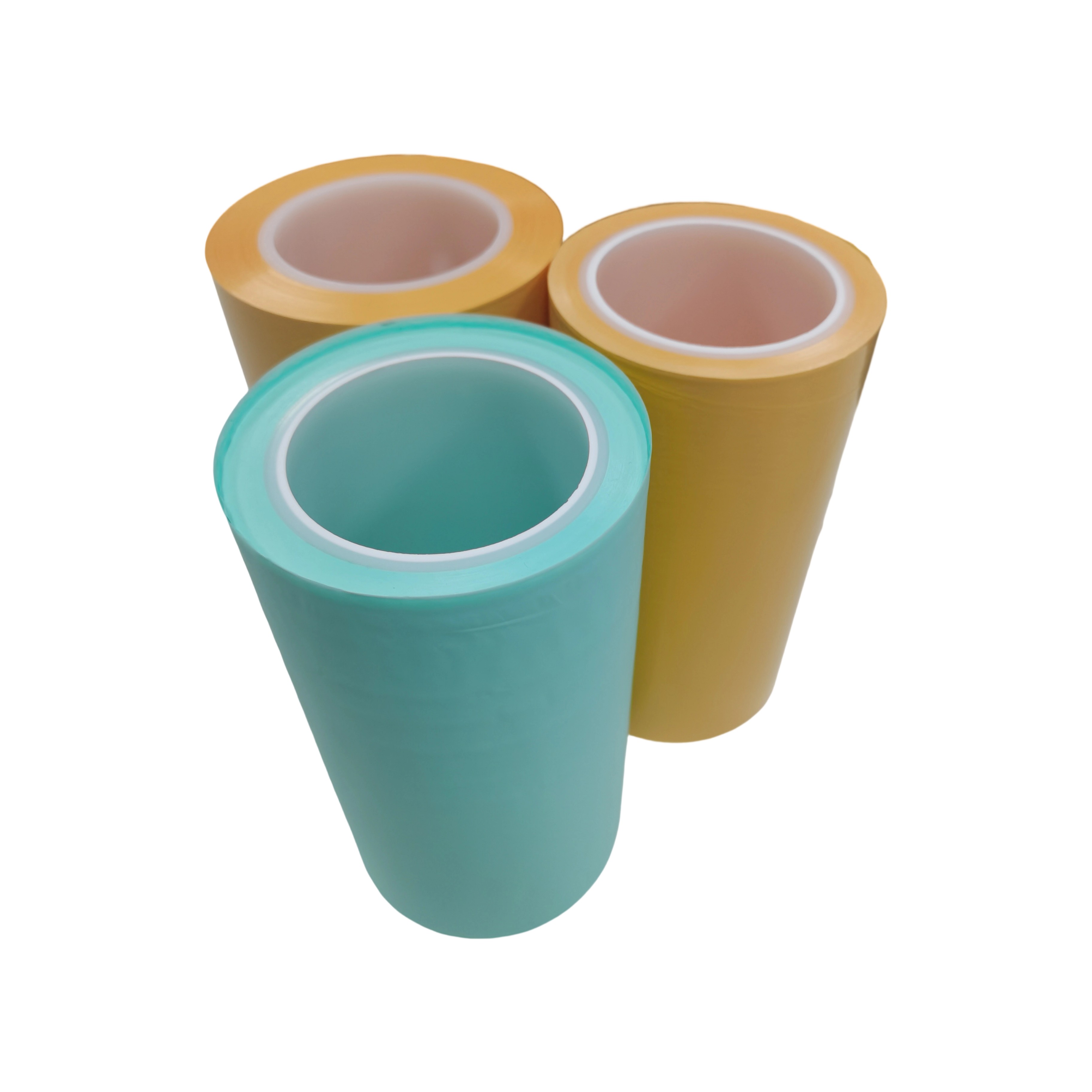
Types of PP Anti-adhesive Film
PP Anti-adhesive Film is categorized based on the mechanism used to achieve anti-adhesive properties, each tailored to specific application requirements:
1. Intrinsic PP Anti-adhesive Film
This type relies solely on the natural low surface energy of polypropylene to deliver non-stick performance, with no additional coatings. It is typically made from high-purity PP resins (homopolymers or copolymers) processed via extrusion or casting. Intrinsic PP Anti-adhesive Film is cost-effective and easy to produce, making it suitable for simple applications such as:
Protecting non-adhesive surfaces (e.g., polished plastic parts, metal sheets) from dust or minor scratches during storage.
Serving as a liner for low-tack products (e.g., mild adhesive labels, non-sticky food wrappers).
Facilitating the separation of stacked plastic components (e.g., injection-molded parts) to prevent friction-induced damage.
Its limitations include moderate non-stick performance—unsuitable for high-tack adhesives or aggressive processing environments.
2. Coated PP Anti-adhesive Film
To enhance anti-adhesive capabilities, this variant features a thin coating on one or both surfaces. The choice of coating depends on the application’s contamination risks and performance demands:
Silicone-Coated PP Anti-adhesive Film: The most common type, silicone coatings (solvent-based, water-based, or solvent-free) create a ultra-low surface energy layer (22–26 dynes/cm). It offers customizable release forces (5–35 g/in), making it adaptable to diverse scenarios—from protecting high-tack double-sided tapes to acting as a release liner for medical dressings. Silicone-coated films are compatible with temperatures up to 130°C (for BOPP substrates), suitable for heat-intensive processes.
Non-Silicone-Coated PP Anti-adhesive Film: Designed for applications where silicone contamination is a concern (e.g., semiconductor manufacturing, pharmaceutical packaging), this type uses alternative coatings such as fluoropolymers, waxes, or modified PP resins. Fluoropolymer coatings provide surface energy as low as 20 dynes/cm and excellent chemical resistance, while wax coatings offer a cost-effective solution for low-temperature packaging (e.g., candy wrappers, baked goods).
Coated PP Anti-adhesive Film can be further classified as single-sided (for targeted protection) or double-sided (for dual-surface non-stick needs, e.g., multi-layer adhesive assemblies).
Manufacturing Process of PP Anti-adhesive Film
The production of PP Anti-adhesive Film involves precise, automated steps to ensure consistent anti-adhesive performance and quality:
Resin Melting and Extrusion: Polypropylene resin (homopolymer for high stiffness, copolymer for enhanced flexibility) is melted in an extruder at 200–230°C. The molten resin is then forced through a flat die to form a continuous PP film. For BOPP-based anti-adhesive film, the extruded sheet is stretched sequentially in the machine direction (MD) and transverse direction (TD) at 100–150°C to improve dimensional stability and tensile strength.
Surface Preparation: For coated variants, the base PP film undergoes pre-treatment to enhance coating adhesion. Corona treatment or plasma treatment raises the film’s surface energy from 29–32 dynes/cm to 38–42 dynes/cm, ensuring the coating bonds securely without delamination.
Anti-adhesive Coating Application: Using precision coating techniques (gravure coating for thin, uniform layers; slot-die coating for thicker coatings), the anti-adhesive agent (silicone or non-silicone) is applied to one or both surfaces. For double-sided coated films, simultaneous or sequential coating systems ensure uniform thickness (1–5 μm per side, tolerance ±0.3 μm).
Curing: The coated film is cured to solidify the anti-adhesive layer. Silicone coatings undergo thermal curing at 120–180°C or UV curing (for UV-curable formulations), while wax coatings are cured via cooling. This step ensures the coating forms a durable, non-stick surface.
Slitting and Rewinding: The finished film is slit into custom widths (10 mm–2 m) using precision slitting machines. It is then rewound onto paper or plastic cores with controlled tension (5–10 N/m) to prevent wrinkling. Quality control checks—including surface energy testing (contact angle meters), adhesion strength evaluation, and thickness measurement—are conducted throughout the process to ensure compliance with standards.
Industrial Applications of PP Anti-adhesive Film
PP Anti-adhesive Film’s versatility makes it indispensable across diverse sectors, addressing unique anti-stick challenges:
1. Packaging Industry
Food Packaging: CPP-based intrinsic or wax-coated PP Anti-adhesive Film is used to wrap sticky food products (e.g., caramel, chocolate, cheese, baked goods). It prevents the food from adhering to the film, maintains freshness, and ensures easy peeling—complying with food safety standards (FDA 21 CFR Part 177, EU 10/2011).
Adhesive Product Packaging: Silicone-coated PP Anti-adhesive Film serves as a liner for adhesive labels, tapes, or stickers. It protects the adhesive layer during storage and transportation, ensuring the product remains usable until application. For example, single-sided coated film lines the back of self-adhesive labels, while double-sided coated film separates multi-layer adhesive tapes.
2. Manufacturing and Processing
Composite Material Production: BOPP-based silicone-coated PP Anti-adhesive Film acts as a release layer between composite laminates (carbon fiber, fiberglass) and molds. It prevents resin from adhering to the mold surface, ensuring smooth part formation and reducing post-processing time. Its thermal stability (up to 130°C) withstands composite curing cycles.
Plastic and Metal Processing: Intrinsic PP Anti-adhesive Film is used to separate stacked plastic injection-molded parts or metal sheets, preventing scratches, friction-induced damage, or unwanted bonding during storage and transportation.
3. Electronics Industry
Component Protection: Thin-gauge (12–25 μm) BOPP-based PP Anti-adhesive Film protects delicate electronic components (e.g., PCB surfaces, OLED displays, semiconductor wafers) during assembly. It prevents adhesion to dust, adhesives, or processing equipment, preserving component performance. Non-silicone-coated variants are preferred for semiconductor applications to avoid silicone contamination.
Battery Manufacturing: In lithium-ion battery production, PP Anti-adhesive Film separates electrode layers or protects adhesive-backed battery components, ensuring safe handling and preventing short circuits.
4. Medical Sector
Medical Device Assembly: Silicone-coated PP Anti-adhesive Film is used as a release liner for medical tapes, wound dressings, and transdermal patches. It ensures pain-free removal from the skin and maintains sterility (compliant with ISO 13485) until use. Its chemical inertness prevents irritation or contamination.
Pharmaceutical Packaging: Non-silicone-coated PP Anti-adhesive Film lines the interior of pharmaceutical blister packs or drug containers, preventing pills or powders from sticking to the packaging material—critical for maintaining dosage accuracy and product quality.
Market Trends and Future Innovations
The global PP Anti-adhesive Film market is experiencing steady growth, driven by demand from packaging, electronics, and medical industries. Key trends shaping its evolution include:
Sustainability: Manufacturers are developing eco-friendly variants, such as bio-based PP Anti-adhesive Film (blended with PLA or other plant-derived polymers) and recyclable anti-adhesive coatings. These innovations reduce reliance on fossil fuels and enable the film to be recycled within existing PP recycling streams, aligning with global sustainability goals (e.g., EU Circular Economy Action Plan).
High-Performance Coatings: Advancements in silicone chemistry are extending the thermal resistance of coated PP Anti-adhesive Film to 150°C, expanding its use in high-temperature processes like advanced composite curing or industrial baking. Non-silicone coatings with enhanced chemical resistance are also being developed for niche applications, such as contact with aggressive pharmaceuticals or industrial chemicals.
Customization: There is a growing demand for tailored solutions, including films with specific release forces (3–40 g/in), thicknesses (8–200 μm), or multi-functional coatings (e.g., anti-static, anti-microbial). For example, anti-static PP Anti-adhesive Film is being designed for electronics manufacturing to prevent electrostatic discharge (ESD) damage, while anti-microbial variants target medical packaging to reduce infection risks.
Smart Integration: Emerging technologies involve embedding sensors (temperature, humidity) or RFID tags into PP Anti-adhesive Film. This enables real-time tracking of product storage conditions, batch information, and usage—critical for regulated sectors like pharmaceuticals and medical devices, where traceability and compliance are paramount.
In conclusion, PP Anti-adhesive Film is a cost-effective, versatile material that addresses critical anti-stick challenges across industries. Its intrinsic properties and customizable coatings make it adaptable to diverse applications, from food packaging to high-precision electronics manufacturing. As sustainability and performance requirements evolve, ongoing innovations in materials and processes will further expand its capabilities, solidifying its role as a key enabler of efficient, high-quality production worldwide.