

Double-sided PP Release Film: Structure, Performance, and Industrial Applications
Double-sided Polypropylene (PP) Release Film is a high-performance variant of PP release film engineered with non-stick coatings on both surfaces, delivering consistent release functionality across its entire thickness. Unlike single-sided PP release film—where only one surface offers non-stick properties—this symmetric design is purpose-built for scenarios requiring dual-sided separation, such as sandwich structures, multi-layer adhesive assemblies, or temporary protection of two surfaces simultaneously. Crafted from polypropylene substrates (BOPP or CPP) and enhanced with specialized coatings (silicone or non-silicone), it balances mechanical resilience, chemical stability, and customizable release performance, making it a critical material in advanced manufacturing, packaging, electronics, and medical sectors. Its ability to ensure residue-free release on both sides while maintaining dimensional stability has solidified its role in precision-driven processes where dual-surface protection or separation is non-negotiable.
Core Structure and Design Principles
The functionality of double-sided PP release film hinges on its symmetric, layered structure, optimized for uniform performance across both surfaces:
Base Layer: The core is a polypropylene substrate, predominantly Biaxially Oriented Polypropylene (BOPP) for industrial applications. BOPP offers exceptional dimensional stability (low thermal expansion coefficient: 15–20 μm/m·°C), tensile strength (25–40 MPa), and thermal resistance (up to 130°C), enabling compatibility with high-temperature processes like composite curing. Cast Polypropylene (CPP) substrates are used for low-temperature applications (up to 90°C), offering superior flexibility and conformability for wrapping irregularly shaped components.
Dual-Side Coatings: Both surfaces of the PP substrate are coated with identical or tailored release agents, with silicone coatings being the industry standard. Solvent-based, water-based, or solvent-free silicone formulations reduce surface energy to 22–28 dynes/cm, ensuring consistent release from adhesives (acrylic, rubber, silicone) with release forces customizable between 5–35 g/in. For contamination-sensitive applications (e.g., semiconductor manufacturing, pharmaceutical packaging), non-silicone coatings (fluoropolymers, modified PP resins) are used, maintaining surface energy at 25–30 dynes/cm while eliminating silicone leaching risks. Critical to its design, the dual coatings exhibit uniform thickness (1–5 μm per side, tolerance ±0.3 μm) to ensure balanced release performance across both surfaces.
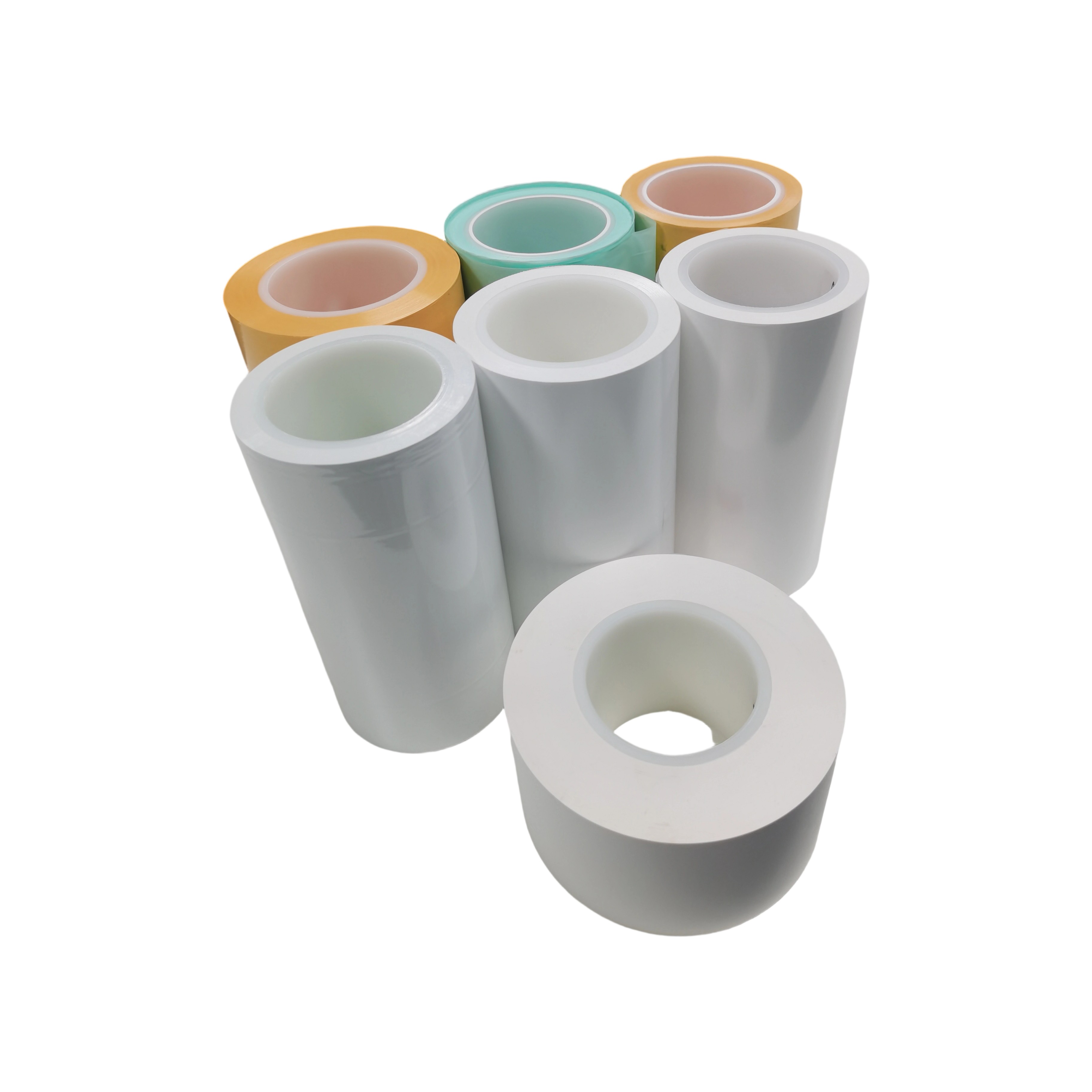
Interface Optimization: The bond between the PP substrate and coatings is enhanced via pre-treatment (corona or plasma), raising the substrate’s surface energy to 38–42 dynes/cm. This ensures coating adhesion strength ≥1.5 N/mm, preventing delamination during processing, winding, or unwinding—a common challenge in dual-coated films.
Key Advantages of Double-sided PP Release Film
Compared to single-sided PP release film or dual-sided films made from other polymers (e.g., PET), double-sided PP release film offers distinct benefits for specialized applications:
Dual-Surface Release Efficiency: It eliminates the need for multiple film layers in processes requiring two-sided separation. For example, in multi-layer adhesive tape production, a single roll of double-sided PP release film can separate two adhesive layers, reducing material complexity and production costs by 20–30% compared to using two single-sided films.
Uniform Performance: The symmetric design ensures consistent release force, surface energy, and chemical resistance across both sides, critical for applications like composite laminates or medical device assembly where uneven release could cause material warping or product defects.
Space and Weight Savings: In compact applications (e.g., flexible electronics, thin-film batteries), its single-layer structure reduces overall thickness (typically 25–100 μm) compared to stacked single-sided films, enabling miniaturization without compromising protection.
Process Versatility: It adapts to diverse manufacturing environments, from high-temperature composite curing (100–130°C for BOPP-based films) to low-temperature packaging (0–50°C for CPP-based films). The dual coatings also resist oils, solvents, and moisture, making it suitable for harsh industrial or medical environments.
Manufacturing Process: Precision and Quality Assurance
Producing double-sided PP release film requires advanced, automated processes to ensure symmetric coating quality and performance consistency:
Substrate Preparation: The PP base film (BOPP or CPP) is unwound and undergoes a two-step cleaning process—ultrasonic cleaning to remove surface contaminants and air-knife drying—to ensure coating adhesion. BOPP substrates are pre-stretched in both machine and transverse directions to enhance dimensional stability before coating.
Dual-Side Coating Application: Using simultaneous or sequential coating systems, release agents are applied to both surfaces. Gravure coating is preferred for thin, uniform layers (1–3 μm), while slot-die coating is used for thicker coatings (3–5 μm) or high-volume production. Precision alignment systems (±0.1 mm) ensure coating overlap is minimized, and edge-trimming mechanisms remove excess coating to maintain width consistency.
Dual-Curing Process: The coated film is passed through a multi-zone curing oven. For silicone coatings, thermal curing (120–180°C) is used, with separate temperature zones for each side to ensure uniform crosslinking. UV-curable coatings utilize dual UV lamps (one per side) with synchronized intensity control (±5% variance) to prevent uneven curing.
Quality Inspection: Post-curing, the film undergoes rigorous testing: release force measurement (using peel force meters, tolerance ±1 g/in), coating thickness analysis (laser micrometers), surface energy testing (contact angle meters), and adhesion strength evaluation (peel tests). Defect detection systems (optical cameras with AI algorithms) identify pinholes, coating unevenness, or delamination, ensuring defect rates <0.1%.
Slitting and Rewinding: The film is slit into custom widths (10 mm–2 m) and rewound onto cores with controlled tension (5–10 N/m) to prevent wrinkling or stretching. Each roll is labeled with release force, thickness, and batch information for traceability.
Industrial Applications: Specialized Solutions for Critical Sectors
Double-sided PP release film’s unique capabilities make it indispensable for applications requiring dual-surface protection or separation:
Adhesives and Tapes
It is the backbone of multi-layer adhesive tape production, such as double-sided foam tapes or medical tapes. The film separates adhesive layers during storage and transportation, ensuring the tape remains usable until application. In tape converting, it enables precise die-cutting of adhesive shapes without residue, as both sides release cleanly from the adhesive.
Composite Materials
In automotive and aerospace composite manufacturing, it acts as a release layer between multiple composite laminates (carbon fiber, fiberglass) or between the laminate and mold. For example, in aircraft wing panel production, double-sided PP release film prevents resin from adhering to the mold and adjacent laminates, ensuring smooth part surfaces and reducing post-processing time by 15–20%. Its thermal resistance (up to 130°C) withstands composite curing cycles, making it a cost-effective alternative to expensive fluoropolymer release films.
Electronics Manufacturing
In flexible electronics (e.g., OLED displays, wearable sensors), thin-gauge (25–50 μm) double-sided PP release film protects both sides of delicate adhesive films or conductive layers during assembly. It prevents contamination from dust or machinery, and its low surface energy ensures residue-free removal, preserving the performance of sensitive electronic components. In battery manufacturing, it separates electrode layers during lithium-ion battery cell assembly, preventing short circuits while enabling easy handling.
Medical Devices
Silicone-coated double-sided PP release film is used in medical device assembly, such as transdermal patches or surgical dressings with dual adhesive zones. It protects both adhesive surfaces until use, maintaining sterility (compliant with ISO 13485) and ensuring pain-free application. The non-silicone variants are used in pharmaceutical packaging, where silicone contamination could affect drug stability, meeting FDA 21 CFR Part 177 and EU 10/2011 standards.
Packaging
In high-end packaging (e.g., luxury goods, electronics), it protects both sides of adhesive-backed labels or seals. For example, in smartphone packaging, it separates the device’s adhesive screen protector from the packaging insert, ensuring the protector remains clean and usable. CPP-based double-sided films are used in food packaging for sticky products (e.g., caramel, gummy candies), where both sides of the film prevent adhesion to the product and packaging, maintaining freshness and appearance.
Market Trends and Future Innovations
The global double-sided PP release film market is growing at a CAGR of 6–8%, driven by demand from advanced manufacturing and medical sectors, with key trends shaping its evolution:
Sustainability: Manufacturers are developing eco-friendly variants, including bio-based PP substrates (blended with 30–50% PLA) and recyclable silicone coatings. These films reduce carbon footprint by 25–30% and are compatible with PP recycling streams, addressing regulatory pressures (e.g., EU Circular Economy Action Plan) and consumer demand for green materials.
High-Temperature Performance: Innovations in BOPP substrates and silicone coatings are extending thermal resistance to 150°C, enabling use in advanced composite curing (e.g., aerospace-grade carbon fiber components) and high-temperature adhesive applications, previously dominated by expensive PET or fluoropolymer films.
Customized Release Profiles: Demand for tailored release forces (3–40 g/in) and multi-functional coatings (e.g., anti-static, anti-microbial) is rising. For example, anti-static double-sided PP release film is being developed for electronics manufacturing to prevent electrostatic discharge (ESD) damage, while anti-microbial variants are targeting medical device packaging to reduce infection risks.
Smart Integration: Emerging technologies include embedding RFID tags or temperature sensors between the PP substrate and coatings for real-time tracking of film usage, batch information, and environmental conditions. This enhances traceability in regulated sectors like medical devices and pharmaceuticals, where compliance with FDA or EU MDR standards is critical.
In conclusion, Double-sided PP Release Film is a specialized material that addresses unmet needs in dual-surface separation and protection. Its symmetric design, uniform performance, and process versatility make it indispensable for advanced manufacturing, electronics, medical, and composite sectors. As industries continue to demand miniaturization, sustainability, and precision, innovations in materials and manufacturing will further expand its applications, solidifying its role as a critical enabler of efficient, high-quality production processes worldwide.