

Anti-adhesive Film: A Comprehensive Guide
Anti-adhesive film, also known as non-stick film, is a specialized polymeric material engineered to minimize or eliminate adhesion between its surface and other substances—such as adhesives, resins, coatings, or viscous materials. Unlike conventional films that may stick to adjacent surfaces during storage or processing, its core design principle revolves around creating a low-surface-energy interface that repels unwanted bonding. This unique property makes it an essential tool in industries where clean, residue-free separation is critical, from manufacturing high-precision components to packaging sticky products. Available in various thicknesses (ranging from 10 to 300 microns) and formats (rolls, sheets, or custom die-cuts), anti-adhesive film balances durability with non-stick performance, ensuring it withstands handling, temperature fluctuations, and chemical exposure while maintaining its anti-adhesive function.
Classification of Anti-adhesive Film
Anti-adhesive films are categorized based on their material composition and the mechanism used to achieve non-stick properties, each tailored to specific application needs.
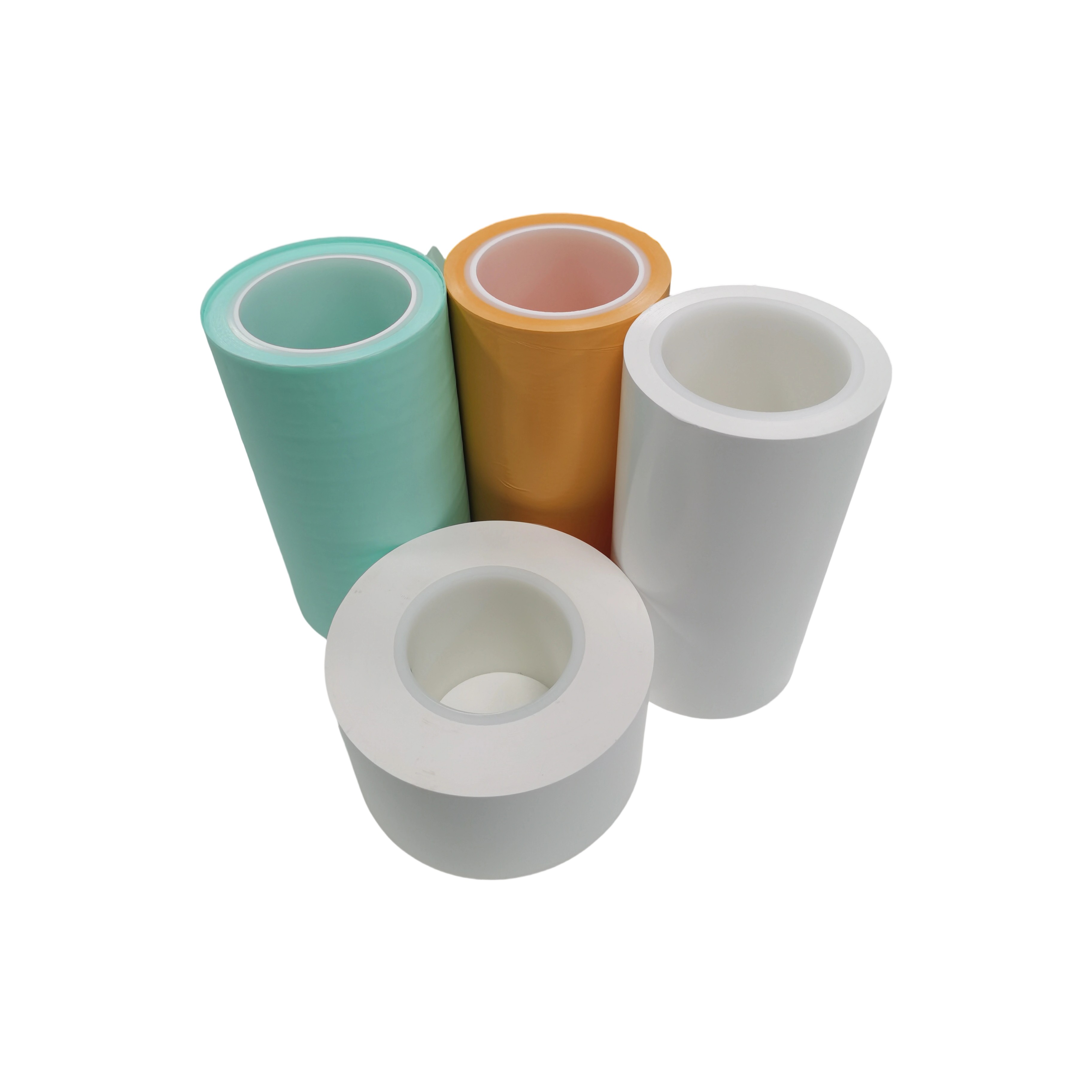
By Material Composition
Polyethylene (PE) Anti-adhesive Film: The most widely used variant, PE anti-adhesive film leverages the inherent low surface energy of polyethylene to resist adhesion. Low-Density Polyethylene (LDPE) films are flexible and conformable, ideal for wrapping sticky items like tapes, labels, or rubber products. High-Density Polyethylene (HDPE) films offer greater rigidity and chemical resistance, making them suitable for industrial applications such as protecting adhesive-coated metal sheets or composite materials during curing. Both types are cost-effective and compatible with most manufacturing processes.
Polypropylene (PP) Anti-adhesive Film: PP anti-adhesive film stands out for its high heat resistance (up to 130°C) and dimensional stability, making it a top choice for high-temperature applications. Biaxially Oriented Polypropylene (BOPP) anti-adhesive films, in particular, have enhanced tensile strength and transparency, making them ideal for packaging food products with sticky surfaces (e.g., candy, baked goods) or as a release liner for heat-sensitive adhesives.
Polyester (PET) Anti-adhesive Film: PET anti-adhesive film excels in durability, high-temperature tolerance (up to 160°C), and resistance to oils, solvents, and moisture. Its rigidity and flatness make it suitable for precision applications, such as protecting semiconductor wafers, printed circuit boards (PCBs), or medical devices that come into contact with adhesives or viscous fluids. It is also widely used in the production of flexible electronics, where non-stick properties and mechanical strength are equally critical.
Specialty Polymer Anti-adhesive Film: For extreme conditions, films made from specialty polymers are available. Polyimide (PI) anti-adhesive films withstand temperatures over 250°C, making them suitable for aerospace or automotive applications involving high-heat processes like soldering or composite curing. Fluoropolymer-based films (e.g., PTFE, FEP) offer ultra-low surface energy (as low as 18 dynes/cm) and exceptional chemical resistance, making them ideal for applications involving aggressive adhesives, acids, or bases—such as in the chemical processing industry or medical devices requiring sterile, non-stick surfaces.
By Anti-adhesive Mechanism
Intrinsic Anti-adhesive Film: This type relies on the base polymer’s natural low surface energy to repel adhesion, without the need for additional coatings. Examples include PE, PP, and PTFE films, which are inherently non-stick due to their molecular structure. They are cost-effective and easy to produce, making them suitable for general-purpose applications.
Coated Anti-adhesive Film: To enhance non-stick performance, some films are coated with specialized materials. Silicone coatings are the most common, creating a smooth, low-surface-energy layer that significantly reduces adhesion. These films are used in applications requiring consistent, long-lasting non-stick properties—such as release liners for double-sided tapes, adhesive labels, or medical dressings. Other coatings, such as fluoropolymers or waxes, are used for niche applications where silicone contamination is a concern (e.g., semiconductor manufacturing).
Key Properties of High-Quality Anti-adhesive Film
The effectiveness of an anti-adhesive film depends on several critical properties, which manufacturers optimize to meet specific application requirements:
Low Surface Energy: The primary driver of anti-adhesive performance, surface energy is typically measured in dynes/cm. High-quality anti-adhesive films have surface energies below 30 dynes/cm—with fluoropolymer films as low as 18 dynes/cm—ensuring minimal adhesion to most substances.
Heat Resistance: For applications involving high temperatures (e.g., curing, soldering, or sterilization), the film must maintain its anti-adhesive properties and structural integrity. PET and PI films, for example, retain their non-stick function even at temperatures above 150°C, while PTFE films can withstand temperatures up to 260°C.
Chemical Resistance: The film must resist degradation or loss of anti-adhesive properties when exposed to chemicals, solvents, oils, or moisture. This is critical in industries like chemical processing, medical devices, or automotive manufacturing, where the film may come into contact with aggressive substances.
Durability: Anti-adhesive film must withstand handling, cutting, and processing without tearing, scratching, or losing its non-stick properties. Tensile strength, tear resistance, and abrasion resistance are key metrics—especially for films used in industrial settings where rough handling is common.
Residue-Free Performance: After use, the film must peel off cleanly without leaving any residues (e.g., coating fragments, polymer particles) on the substrate. This is essential for sensitive applications like electronics manufacturing or medical devices, where residues could compromise product performance or safety.
Manufacturing Process of Anti-adhesive Film
The production of anti-adhesive film involves precise steps to ensure consistent non-stick performance, quality, and compatibility with end-use applications:
Polymer Extrusion: The base polymer (e.g., PE, PP, PET) is melted in an extruder at controlled temperatures (180–300°C, depending on the material). The molten polymer is then forced through a flat die to form a continuous, thin film, which is cooled rapidly using chilled rollers to solidify its structure and maintain dimensional stability.
Surface Treatment (If Applicable): For coated anti-adhesive films, the extruded film undergoes pre-treatment (e.g., corona or plasma treatment) to improve coating adhesion. A thin layer of anti-adhesive coating (e.g., silicone, fluoropolymer) is then applied using techniques like gravure coating, slot-die coating, or spray coating. The coating is cured using heat, UV light, or electron beam radiation to form a durable, non-stick layer.
Slitting and Rewinding: The continuous film is slit into custom widths using precision slitting machines, tailored to customer specifications (e.g., 20mm for medical device packaging, 1.5m for industrial sheets). The slit films are then rewound onto cores (paper, plastic, or metal) to form rolls of varying lengths, making them easy to handle, store, and integrate into automated production lines.
Quality Control: Throughout the process, rigorous quality checks are conducted to ensure performance and consistency. This includes measuring surface energy (using contact angle meters), testing heat resistance (in temperature chambers), verifying chemical resistance (via exposure to solvents), and checking for defects (e.g., pinholes, coating unevenness, or tears). Samples are also tested for adhesion using peel force meters to ensure they meet the required non-stick standards.
Applications Across Industries
Anti-adhesive film’s versatility makes it a critical component in diverse sectors, addressing unique non-stick and protection needs:
Packaging Industry
In packaging, anti-adhesive film is used to protect sticky or adhesive-coated products. It serves as a liner for adhesive labels, tapes, and stickers, preventing them from sticking to themselves or packaging materials during storage and transportation. For food packaging, it is used to wrap sticky items like candy, chocolate, or baked goods, ensuring easy separation and maintaining product freshness. Transparent PP or PET anti-adhesive films also allow consumers to see the product while keeping it free from adhesion.
Electronics Manufacturing
The electronics industry relies on anti-adhesive film to protect sensitive components from adhesives and contaminants. It is used as a release liner for adhesive films in flexible electronics (e.g., OLED screens, wearable devices) and as a protective layer for PCBs, semiconductor wafers, and connectors during assembly. PET or PI anti-adhesive films, with their high heat resistance and residue-free performance, are ideal for soldering or curing processes, where non-stick properties and durability are critical.
Automotive and Aerospace
In automotive and aerospace manufacturing, anti-adhesive film is used to protect adhesive-coated parts (e.g., body panels, interior trim) during transportation and assembly. High-temperature-resistant PP or PI films are used as a release liner for composite materials (e.g., carbon fiber) during curing, ensuring easy separation of the film from the finished composite part. Fluoropolymer films are also used in engine components or aerospace parts that come into contact with high-temperature oils or fuels, where chemical resistance and non-stick properties are essential.
Medical Industry
The medical industry requires anti-adhesive film to be sterile, non-toxic, and residue-free. It is used as a release liner for medical dressings, transdermal patches, and surgical tapes, ensuring easy application and removal without irritating the skin. Sterile PTFE or PET anti-adhesive films are also used in surgical instruments, diagnostic devices, and drug delivery systems, where non-stick properties and compatibility with sterile processes are critical.
Market Trends and Future Outlook
The global anti-adhesive film market is growing steadily, driven by increasing demand from end-use industries and technological advancements. Key trends shaping the market include:
Sustainability: With growing environmental concerns, manufacturers are developing eco-friendly anti-adhesive films using bio-based polymers (e.g., PLA derived from corn starch) or recyclable materials. These films reduce reliance on fossil fuels and minimize waste, catering to consumer and regulatory demands for sustainable packaging and manufacturing.
High-Performance Films: There is a rising demand for anti-adhesive films that can withstand extreme conditions—such as higher temperatures, aggressive chemicals, or sterile environments. This is driving innovation in specialty polymers like high-temperature PI films or chemical-resistant fluoropolymer films, particularly in the aerospace, automotive, and medical industries.
Customization: As industries become more specialized, the demand for custom anti-adhesive films is increasing. This includes films with tailored thicknesses, widths, surface energies, or coatings to meet niche application needs—such as ultra-thin films for microelectronics or sterile films for medical devices. Manufacturers are investing in flexible production lines to deliver these custom solutions efficiently.
Integration with Smart Technologies: The future may see anti-adhesive films integrated with smart features, such as sensors to monitor temperature, humidity, or adhesion levels. This would be particularly useful in industries like electronics or medical devices, where real-time monitoring of film performance could improve product quality and safety.
In conclusion, anti-adhesive film is a vital material that enables clean, efficient, and safe manufacturing and packaging across industries. Its ability to repel adhesion while maintaining durability and compatibility with diverse processes makes it irreplaceable in modern production. As industries evolve and demand for high-performance, sustainable solutions grows, anti-adhesive film manufacturers will continue to innovate, pushing the boundaries of non-stick technology to meet the ever-changing needs of the global market.