

Release Film: A Comprehensive Overview
Release film, also known as release liner or separator film, is a specialized polymeric material designed to provide a temporary, non-sticky surface that facilitates the easy separation of adhesive products, composite materials, or processed components. It acts as a protective barrier during manufacturing, storage, and transportation, ensuring the integrity of the bonded or coated surface until its intended use. With its unique combination of low surface energy, durability, and compatibility with diverse substrates, release film has become an indispensable component in numerous industries, ranging from electronics and packaging to automotive and medical devices.
Core Definitions and Classification
At its essence, release film functions by minimizing the adhesion force between itself and the adjacent material—typically an adhesive, resin, or coating. This is achieved through either intrinsic material properties (e.g., low surface energy polymers) or surface treatments (e.g., silicone coating). Release films are classified based on several key crite
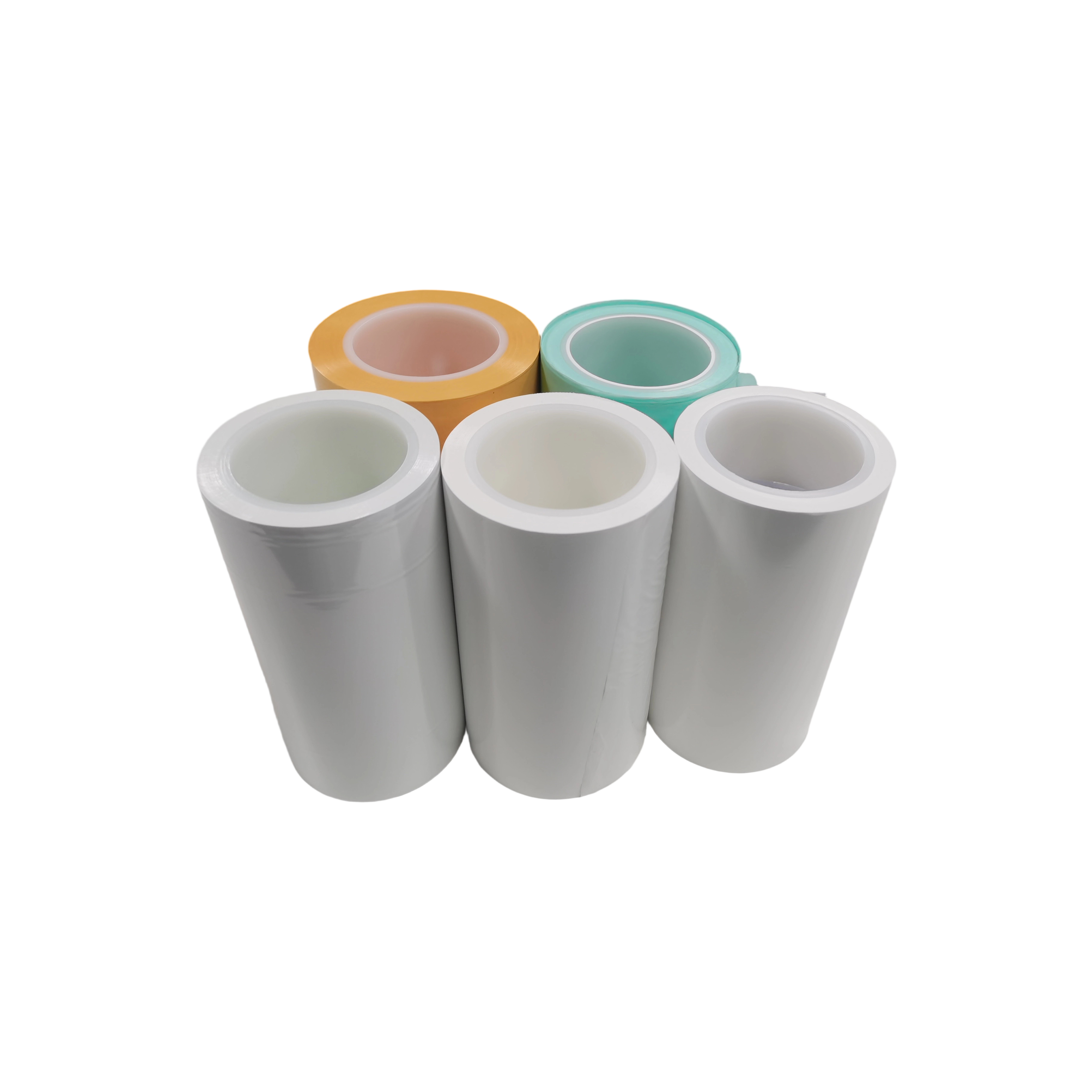 ria:
ria:
By Material Composition
Polyethylene (PE) Release Film: Cost-effective and versatile, PE films (including LDPE, HDPE, and LLDPE) offer good flexibility and chemical resistance. They are widely used in packaging, label printing, and low-temperature applications.
Polypropylene (PP) Release Film: Boasting higher heat resistance and rigidity than PE, PP release films are ideal for high-temperature processes such as composite curing and hot-melt adhesive applications. Biaxially oriented PP (BOPP) films provide enhanced tensile strength and dimensional stability.
Polyester (PET) Release Film: PET-based films excel in high-temperature resistance (up to 150°C or higher), mechanical strength, and transparency. They are the preferred choice for electronics manufacturing (e.g., PCB laminates, adhesive tapes) and medical device production.
Specialty Polymers: Films made from polyimide (PI), polyethylene terephthalate glycol (PETG), or fluoropolymers (e.g., PTFE) cater to extreme conditions, such as high heat, chemical exposure, or ultra-low adhesion requirements.
By Surface Treatment
Silicone-Coated Release Film: The most common type, silicone coating imparts ultra-low surface energy (typically 20–30 dynes/cm), ensuring consistent release performance across a wide range of adhesives (acrylic, rubber, silicone). It is available in different release forces (light, medium, heavy) to match specific application needs.
Non-Silicone Release Film: Utilizes alternative coatings (e.g., fluoropolymers, waxes) or intrinsic polymer properties (e.g., PTFE) for applications where silicone contamination is a concern, such as in semiconductor manufacturing or food packaging.
Untreated Release Film: Relies on the base polymer’s natural low surface energy (e.g., PTFE, HDPE) for minimal adhesion, suitable for simple, low-adhesion applications.
Manufacturing Process
The production of release film involves several critical steps to ensure consistent quality and performance:
Film Extrusion: The base polymer (e.g., PET, PP) is melted and extruded through a die to form a continuous film, which is then cooled and stretched (uniaxially or biaxially) to enhance mechanical properties.
Surface Treatment: For silicone-coated films, the extruded film undergoes corona treatment or plasma treatment to improve coating adhesion. A thin layer of silicone resin is then applied via gravure coating, slot-die coating, or spray coating.
Curing: The coated film is cured at elevated temperatures (typically 120–180°C) to crosslink the silicone, forming a durable, low-adhesion surface.
Slitting and Rewinding: The finished film is slit into custom widths and rewound onto cores, ready for distribution. Quality control checks (e.g., release force testing, thickness measurement, surface cleanliness) are performed throughout the process.
Key Properties and Performance Metrics
Release film’s effectiveness is defined by several critical properties:
Release Force: The force required to peel the film from the adhesive or substrate, measured in grams per inch (g/in) or Newtons per meter (N/m). It must be balanced—too low, and the film may detach prematurely; too high, and it may damage the adhesive.
Surface Energy: Typically below 35 dynes/cm to minimize adhesion. Silicone-coated films often have surface energies between 22–28 dynes/cm.
Thickness Uniformity: Critical for consistent release performance and processability, with tolerances often within ±5% of the target thickness (ranging from 12–250 microns).
Heat Resistance: The ability to withstand processing temperatures without deformation or degradation. PET films can tolerate 120–150°C, while PI films can endure over 200°C.
Mechanical Strength: Tensile strength, elongation at break, and tear resistance ensure the film can withstand handling, winding, and unwinding without damage.
Applications Across Industries
Release film’s versatility makes it a cornerstone material in numerous sectors:
Electronics Manufacturing
Adhesive Tapes and Labels: Provides a release liner for double-sided tapes, protective films, and pressure-sensitive labels used in smartphones, laptops, and consumer electronics.
PCB and Semiconductor Production: Acts as a carrier for solder masks, die-cut components, and adhesive films during circuit board assembly and semiconductor packaging.
Battery Manufacturing: Used in lithium-ion battery production to separate electrode layers and protect adhesive bonds in battery packs.
Packaging and Labeling
Flexible Packaging: Serves as a release liner for adhesive seals, tamper-evident labels, and packaging tapes.
Food Packaging: Non-silicone release films are used for food-grade labels and adhesive strips, ensuring compliance with safety standards.
Automotive and Aerospace
Composite Materials: Facilitates the manufacturing of carbon fiber or fiberglass composites (e.g., vehicle body panels, aircraft components) by preventing resin adhesion to molds.
Automotive Interior: Used in the production of dashboards, door panels, and seat upholstery, where adhesive-backed materials require precise release.
Medical Devices
Medical Tapes and Dressings: Provides a sterile release liner for surgical tapes, wound dressings, and transdermal patches, ensuring biocompatibility and easy application.
Device Assembly: Assists in bonding components of medical devices (e.g., catheters, diagnostic equipment) without contaminating sterile surfaces.
Market Trends and Future Developments
The global release film market is driven by growing demand from electronics, automotive, and medical industries, with a focus on sustainability, high-performance, and customization. Key trends include:
Sustainable Materials: Development of bio-based release films (e.g., PLA-based) and recyclable or compostable options to reduce environmental impact.
High-Temperature and Specialty Films: Increased demand for films that withstand extreme temperatures (e.g., for electric vehicle batteries) and harsh chemicals (e.g., in industrial coatings).
Customization: Tailored release forces, thicknesses, and widths to meet the unique needs of niche applications, such as microelectronics or advanced composites.
Improved Coating Technologies: Innovations in silicone and non-silicone coatings to enhance release consistency, reduce contamination risks, and extend service life.
In conclusion, release film is a critical enabler of modern manufacturing, offering precise control over adhesion and protection for a wide range of products. Its adaptability to diverse materials, processes, and industries ensures it will remain a vital component in the development of new technologies and sustainable solutions. As industries evolve, release film manufacturers continue to innovate, pushing the boundaries of performance, durability, and environmental responsibility.