

PET Release Film: The Engine of Efficiency and Innovation in the Packaging and Printing Industry
In the dynamic and visually-driven worlds of packaging and printing, success hinges not only on creative design but also on the flawless execution of complex converting processes. Behind the scenes of every eye-catching label, intricate decal, and durable laminate lies a critical, yet often overlooked, component: the PET Release Film. This engineered material, a workhorse of modern industrial operations, serves as the foundational backbone that enables precision, protects sensitive adhesives, and ensures high-speed production. Far from being a simple liner, PET release film is a sophisticated product that directly influences quality, efficiency, and innovation across the packaging and printing spectrum.
Fundamental Composition and engineered Structure
A PET (Polyethylene Terephthalateate) Release Film is a composite material meticulously designed for performance. Its structure is a testament to material science, comprising multiple functional layers:
The Base Film: The core is a biaxially oriented PET film. This orientation process, which stretches the film in two directions, imbues it with exceptional tensile strength, puncture resistance, and outstanding dimensional stability. This means the film resists stretching, shrinking, or warping under the tensions of high-speed converting presses and the heat of curing processes. The inherent clarity of PET also allows for excellent transparency, which is crucial for visual inspection and the use of optical sensors for precise registration during die-cutting.
The Release Coating: Applied to the base film is a specialized coating, most commonly silicone-based, though other chemistries exist for specific needs. This coating is engineered to have a precisely calibrated "release force" – the amount of peelforce required to separate the film from the adhesive it protects. This force can be tailored from "very light" or "easy release" for delicate applications to "heavy" or "tight release" for aggressive adhesives or high-temperature processes. The consistency of this release force from batch to batch is paramount for trouble-free production runs.
Functional Additives and Treatments: To meet the diverse demands of the industry, the film is often enhanced with additional properties:
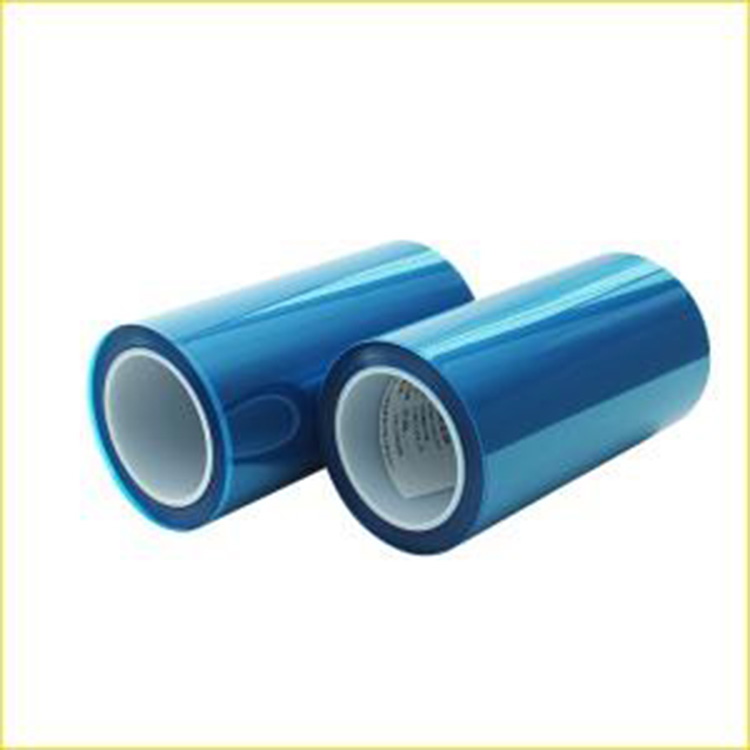
Surface Embossing: Some films are given a matte or embossed surface to improve air egress during lamination, preventing bubbles, or to provide a specific texture.
Primers: These ensure a permanent bond between the silicone release coating and the PET base, preventing transfer or delamination.
Barrier Properties: Coatings can be added to enhance resistance to moisture, oxygen, or chemicals, protecting sensitive adhesives or substrates.
Pivotal Applications in Packaging and Printing
The versatility of PET release film is demonstrated through its wide range of critical applications:
1. Pressure-Sensitive Labels and Stickers:
This is the most voluminous application. PET release liners are the carrier for the entire pressure-sensitive adhesive (PSA) label stock. They protect the adhesive during shipping, storage, and the converting process, which includes printing, die-cutting, and matrix stripping. The liner must provide a clean and consistent release at the exact moment of application, whether by hand or high-speed automated labeling equipment. A failure here—such as adhesive residue left on the liner (release failure) or the label tearing upon dispensing (too much hold-back)—can bring a production line to a halt.
2. Industrial Tapes and Graphic Arts:
High-performance adhesive tapes, including double-sided tapes, masking tapes, and mounting tapes, are universally wound on PET release liners. In the graphic arts sector, this is essential for vinyl films used for vehicle wraps, signage, and decorative graphics. The liner protects the adhesive during die-cutting into complex shapes and allows for easy, bubble-free application. The film's stiffness is crucial here, as it acts as a handling layer, preventing the flimsy, adhesive-coated vinyl from curling and sticking to itself before the installer is ready.
3. Laminating and Protective Films:
In the production of premium packaging, credit cards, and book covers, lamination is used to provide a protective and aesthetically pleasing glossy or matte finish. PET release films are used as the top layer in the lamination press. They prevent the hot-melt adhesive from bonding to the heated plates of the press, imparting a perfectly smooth surface to the finished product, and ensuring a consistent finish across the entire production run.
4. Composite and Textile Transfer:
For applications involving heat-transfer films, where a design or metalized layer is transferred onto a fabric or another substrate under heat and pressure, PET film acts as the stable, heat-resistant carrier. It holds the design elements in place until the moment of transfer, after which it is cleanly released and discarded.
Critical Performance Attributes for the Industry
The selection of the correct PET release film is a strategic decision based on several key performance criteria:
Controlled and Consistent Release Force: The single most important property. It must be precisely tailored to the adhesive and the application method. Inconsistent release leads to application failures and production downtime.
High Caliper and Thickness Uniformity: A uniform thickness across the entire roll is non-negotiable for consistent performance on printing and converting equipment. Variations can cause wrinkles, web breaks, and misregistration during printing and die-cutting.
Superior Die-Cutting Performance: The film must be strong enough to withstand the pressure of the die without fracturing, yet allow for clean penetration to kiss-cut the label without cutting through the liner itself. It also plays a key role in efficient matrix waste removal.
Cleanliness and Low Silicone Transfer: The release coating must not transfer onto the adhesive. Any contamination can compromise the adhesive's ultimate bonding strength or interfere with the printability of the surface.
Chemical and Temperature Resistance: The film must resist solvents from inks and adhesives and maintain its properties during UV curing or other drying processes.
The Future: Driving Sustainability and Smart Packaging
As the packaging and printing industries evolve, so too does the technology of PET release films. Future trends are focused on:
Sustainability: A major push is towards lightweighting (using thinner films without sacrificing performance) and developing recyclable or compostable release liner systems. The industry is also actively involved in creating recycling streams for silicone-coated PET liners.
Enhanced Functionality: The development of liners with built-in conductive properties for electronic smart labels or those with enhanced barrier properties for sensitive food and pharmaceutical packaging.
Precision for Digital Printing: As digital printing continues to grow, the demand for ultra-clean, dimensionally stable, and perfectly flat liners that can run flawlessly through high-speed digital presses is increasing.
In conclusion, the PET Release Film is an unsung hero in the packaging and printing industry. It is a pinnacle of polymer engineering that provides the critical interface between a sticky, sensitive adhesive and its final, functional form. By ensuring protection, enabling precision, and driving efficiency, this humble film empowers brands to deliver the durable, attractive, and reliable products that consumers expect, solidifying its role as an indispensable engine of modern manufacturing.