

PET Release Film: The Unsung Guardian of Precision in the Electronics Industry
In the intricate and high-stakes world of modern electronics manufacturing, where components are measured in micrometers and tolerances are infinitesimal, the materials that facilitate production are as critical as the active components themselves. Among these essential ancillary materials, Polyethylene Terephthalate (PET) Release Film stands out as a masterclass in material engineering—a deceptively simple product that plays a multifaceted and indispensable role in ensuring quality, efficiency, and innovation. This film, a thin, robust, and chemically engineered substrate, acts as a temporary protective layer, a reliable separation interface, and a process enabler across a vast spectrum of electronic fabrication processes.
Fundamental Composition and Structure
At its core, a PET Release Film is a biaxially oriented polyester film known for its exceptional mechanical strength, thermal stability, chemical resistance, and dimensional consistency. However, its functionality is derived from a sophisticated composite structure:
PET Base Film: This is the backbone, providing the film's structural integrity. The biaxial orientation process stretches the film in both machine and transverse directions, aligning the polymer chains. This results in superior tensile strength, puncture resistance, and minimal thermal shrinkage, even when subjected to the high temperatures of lamination or curing processes. The clarity of the base film is also crucial, allowing for visual inspection and alignment using automated optical systems.
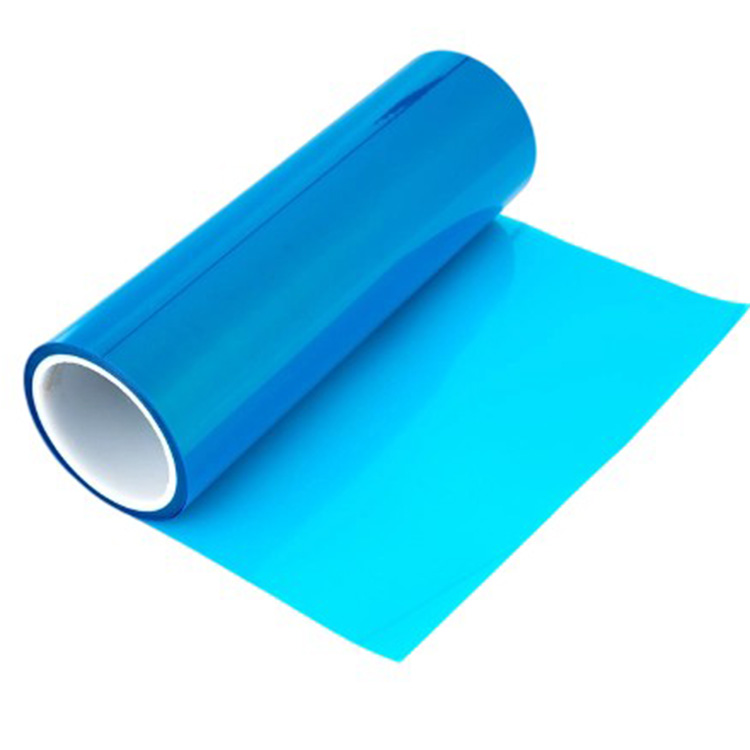
Release Coating: This is the functional heart of the product. A specialized silicone-based or non-silicone coating is applied to one or both sides of the PET base. This coating is engineered to have a precisely controlled "release force"—the amount of force required to peel the film away from an adhesive surface. This force can be tailored from "light" or "easy" release to "heavy" or "tight" release, depending on the application.
Functional Layers: Advanced release films may incorporate additional layers, such as:
Adhesion-Promoting Primers: To ensure the release coating bonds permanently to the PET base.
Anti-Static Coatings: Critical in electronics to prevent the accumulation of electrostatic discharge (ESD), which can irreparably damage sensitive microchips and circuits.
Barrier Coatings: To protect against moisture, oxygen, or other environmental contaminants.
Pivotal Applications in Electronics Manufacturing
The versatility of PET Release Films is demonstrated by their use in several key electronic manufacturing areas:
1. Flexible Printed Circuit (FPC) and PCB Lamination:
In the production of FPCs and multi-layer PCBs, layers of copper, prepreg (pre-impregnated fiberglass), and bonding sheets are stacked and laminated under high heat and pressure. PET release films are placed on the outer surfaces of the press plates. They prevent the uncured epoxy resin from bleeding out and bonding to the expensive, precision-made press plates. Their high thermal stability ensures they do not degrade, melt, or transfer any contaminants onto the PCB, resulting in a clean, smooth surface finish on the final board.
2. Die Attach Film (DAF) and Semiconductor Packaging:
In the delicate process of semiconductor packaging, Die Attach Films are ultra-thin, B-stage epoxy films used to mount a silicon die onto a lead frame or substrate. These DAFs are supplied laminated between a rigid carrier and a PET release film. The release film protects the DAF from contamination and moisture during storage and transport. During the die-attach process, the release film is cleanly peeled away, exposing the pristine adhesive surface for placement. The controlled release force is vital here to prevent stretching or tearing the fragile DAF.
3. Acrylic Foam Tapes and Adhesive Transfer:
High-performance acrylic foam tapes are widely used for structural bonding, mounting, and gasketing in electronic assemblies, from smartphone displays to automotive control units. These tapes are often coated onto a PET release liner, which is wound into rolls. The liner protects the adhesive during die-cutting into precise shapes. Furthermore, it acts as a carrier, allowing for the easy, bubble-free application of the tape onto a component. The film's stiffness and lack of stretch ("low elongation") are crucial for ensuring the tape does not distort during automated application.
4. EMI Shielding and Thermal Interface Materials:
Electromagnetic Interference (EMI) shielding gaskets and Thermal Interface Materials (TIMs), such as thermal pads or phase change materials, are often supplied with PET release liners. The film prevents the soft, conformable material from sticking to itself or other surfaces before use, while also protecting its surface integrity to ensure optimal thermal or electrical conductivity upon installation.
Critical Performance Attributes
The selection of a PET release film is a precise science, driven by several non-negotiable performance attributes:
Consistent and Controlled Release Force: This is the most critical parameter. Batch-to-batch consistency is paramount for stable, high-yield production lines. An unexpected "tight" release can cause adhesive transfer or part damage, while an "easy" release can lead to premature delamination.
High-Temperature Resistance: Films must withstand prolonged exposure to temperatures ranging from 150°C to over 200°C without yellowing, shrinking, or losing their release properties.
Superior Flatness and Dimensional Stability: Any warping, curling, or stretching can cause misalignment in automated processes, leading to scrap and reduced yield.
Clean Release and Low Silicone Transfer: The release coating must detach cleanly without leaving any silicone residue on the adhesive surface, as this residue can interfere with subsequent bonding, plating, or printing steps.
Excellent Surface Smoothness: A flawless surface is necessary to impart a high-gloss, defect-free finish to the final product, such as a laminated PCB.
The Future: Driving Miniaturization and Advanced Packaging
As the electronics industry marches towards greater miniaturization, embodied by trends like 5G, the Internet of Things (IoT), and advanced heterogeneous integration, the demands on PET release films will only intensify. Future developments are likely to focus on:
Ultra-Thin Films: Developing carrier films thinner than 25 microns to accommodate the thinning of dies and substrates.
Advanced Functional Coatings: Enhanced anti-static properties for next-generation semiconductors, and engineered surface matteness for specific optical or bonding requirements.
Sustainability: The development of bio-based PET or recyclable release liner systems is becoming increasingly important to align with the industry's environmental goals.
In conclusion, the PET Release Film is far more than a simple disposable liner. It is a highly engineered, precision component that sits at the heart of modern electronics fabrication. By providing a reliable, temporary protective barrier, it enables the mass production of smaller, faster, and more complex electronic devices that define our contemporary world. Its continued evolution will be intrinsically linked to the pioneering advancements of the electronics industry it so faithfully serves.