

High Purity PP Release Film for Automotive Electronics: Ensuring Precision and Reliability
1. Introduction
In the rapidly evolving automotive industry, the integration of advanced electronics has become a cornerstone of innovation. From advanced driver-assistance systems (ADAS) to electric vehicle (EV) battery management and infotainment systems, electronic components are critical to vehicle performance and safety. As these technologies advance, the demand for high-performance materials that ensure manufacturing precision and long-term reliability has surged. Among these materials,Pp Release Film for Electronics Industry High Purity Polypropylene (PP) Release Film plays a pivotal role in the production of sensitive automotive electronic components.
This specialized film is engineered to provide exceptional cleanliness, dimensional stability, and chemical inertness, making it an ideal solution for processes such as printed circuit board (PCB) fabrication, flexible circuit laminations, and composite molding. Its ability to protect delicate surfaces during manufacturing while ensuring contamination-free release is indispensable for maintaining the integrity of automotive electronics.
2. What is High Purity PP Release Film?
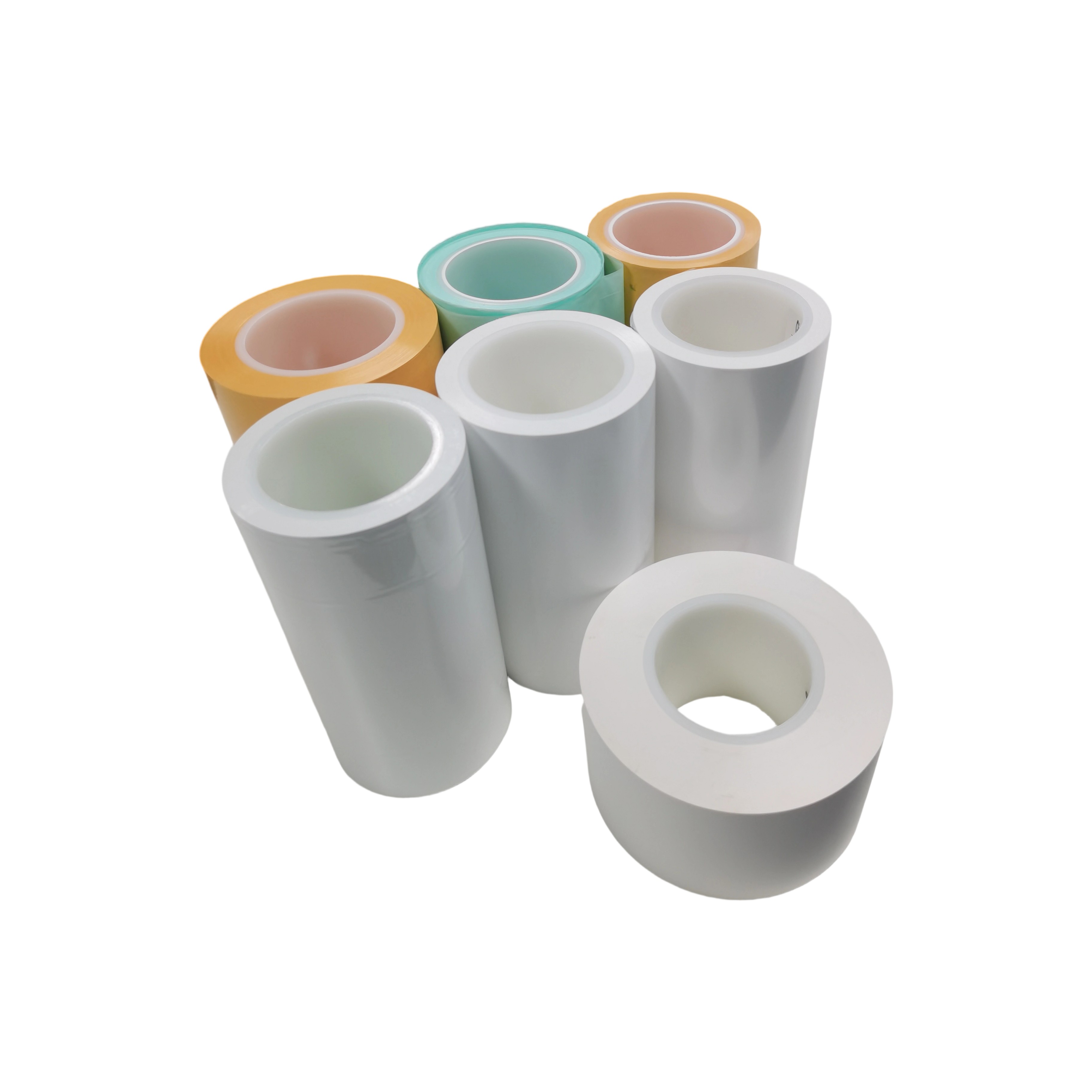
High Purity PP Release Film is a biaxially oriented polypropylene film manufactured under stringent controlled conditions to minimize impurities and ensure consistent performance. Unlike standard release films,Pp Release Film for Electronics Industry it is produced using ultra-pure raw materials and advanced processing techniques to achieve:
Low Volatile Organic Compounds (VOCs): Prevents outgassing that could contaminate sensitive electronic surfaces.
Minimal Particulate Shedding: Ensures no transfer of micro-debris during release.
Superior Surface Smoothness: Provides uniform contact and release properties.
Chemical Inertness: Resists reactions with resins, adhesives, Pp Release Film for Electronics Industry or solvents used in electronic component manufacturing.
Pp Release Film for Packaging Industry These properties make it an essential material for applications where even microscopic contaminants can compromise functionality and reliability.
3. Key Properties and Advantages
3.1. Ultra-High Purity
The film is manufactured in cleanroom environments to achieve ISO Class 5-6 standards, ensuring minimal impurities. This is critical for automotive electronics, where contaminants can lead to short circuits, signal interference, or component failure.
3.2. Excellent Release Performance
The film’s surface is engineered to provide consistent and easy release from adhesives, resins, and composite materials without leaving residues. This reduces production waste and improves yield.
3.3. Thermal Stability
With a high melting point (typically above 160°C) and excellent heat resistance, the film maintains its integrity during high-temperature processes such as autoclave curing, vacuum bagging, and PCB lamination.
3.4. Dimensional Stability
The biaxial orientation process ensures low shrinkage and high tensile strength, preventing deformation during manufacturing. This is essential for maintaining precise tolerances in multilayer PCBs and flexible circuits.
3.5. Dielectric Properties
PP is inherently an excellent electrical insulator, making the film ideal for use in electronic applications where electrical isolation is required.
4. Applications in Automotive Electronics
4.1. PCB and Flexible Circuit Manufacturing
In the production of rigid and flexible PCBs, the release film is used as a separator during the lamination process. It prevents prepreg layers from adhering to press plates while ensuring smooth, void-free layers. Its high purity prevents chemical contamination that could affect solderability or electrical performance.
4.2. Battery Module Assembly
Pp Release Film for Packaging Industry In EVs, battery modules require precise stacking of electrode and separator layers. High Purity PP Release Film is used as a interleaving material to protect thin electrodes and separators during handling and stacking, preventing scratches, dust adhesion, and static buildup.
4.3. Adhesive Tape and Label Protection
Many automotive electronic components use adhesive tapes for mounting or shielding. The release film serves as a liner for these tapes, ensuring they remain contamination-free until application.
4.4. Composite Curing for Sensors and Housings
Sensors, housings, and structural components often use fiber-reinforced composites. The release film is employed in vacuum bagging and autoclave processes to achieve resin-rich, pore-free surfaces while facilitating easy demolding.
4.5. Display and Touch Panel Production
Modern vehicles incorporate digital displays and touch panels. The release film is used during the lamination of optical layers to prevent scratches, Newton rings, and contamination.
5. Why Automotive Electronics Demand High Purity?
Pp Release Film for Packaging Industry Automotive electronics operate in harsh environments characterized by temperature extremes, vibration, humidity, and exposure to chemicals. Contaminants introduced during manufacturing can lead to:
Corrosion: Ionic impurities can accelerate electrochemical migration.
Delamination: Residual contaminants can weaken adhesive bonds.
Electrical Failures: Particulates can cause short circuits or arcing.
Signal Loss: Surface impurities can interfere with high-frequency signals.
Thus, using High Purity PP Release Film mitigates these risks by ensuring a clean manufacturing process.
6. Manufacturing and Quality Control
Producing High Purity PP Release Film requires:
Medical-Grade PP Resins: Sourced to ensure low extractables and VOCs.
Cleanroom Extrusion and Handling: Processes conducted in controlled environments to avoid contamination.
Advanced Filtration: Melt filtration systems remove any micron-sized impurities.
Rigorous Testing: Including:
ICP-MS (Inductively Coupled Plasma Mass Spectrometry) for ionic contamination.
GC-MS (Gas Chromatography-Mass Spectrometry) for VOC analysis.
Laser particle counting for particulate measurement.
ASTM/IEC standardized tests for release force, surface energy, and dielectric strength.
7. Future Trends and Innovations
As automotive electronics evolve, so will the requirements for release films:
Higher Temperature Resistance: For next-generation wide-bandgap semiconductor packaging.
Thinner Gauges with Higher Strength: For miniaturized components.
Anti-Static and Conductive Variants: To prevent ESD damage during handling.
Sustainability: Bio-based PP and recyclable films aligned with automotive sustainability goals.
8. Conclusion
High Purity PP Release Film may seem like a humble material, but it is an unsung hero in the manufacturing of reliable automotive electronics. By ensuring contamination-free production, enabling precision processes, and enhancing component longevity, it directly contributes to the safety, performance, and innovation of modern vehicles. As the automotive industry continues its shift toward electrification and autonomy, the role of such high-performance materials will only grow in importance.
Manufacturers and suppliers must continue to innovate and adhere to stringent quality standards to meet the escalating demands of this dynamic industry.