

Ultra-heavy Release PE Film: The Robust Guardian for Demanding Industrial Applications
1. Introduction
In the realm of industrial manufacturing and composite production, material performance under extreme conditions often determines the success or failure of entire production processes. While standard release films serve adequately for conventional applications, industries dealing with heavyweight composites, aggressive resins, and challenging processing environments require a more robust solution. Ultra-heavy Release Polyethylene (PE) Film emerges as precisely such a solution—engineered to deliver exceptional durability, superior protection, and reliable release performance in the most demanding scenarios.
This specialized heavy-gauge release film represents a significant advancement in material technology, specifically designed to withstand extreme pressures, high temperatures, and aggressive chemical environments that would compromise thinner or less durable materials. Its development addresses critical needs in aerospace, wind energy, marine, and automotive sectors where composite manufacturing pushes the boundaries of material science.
2. Defining Ultra-heavy Release PE Film
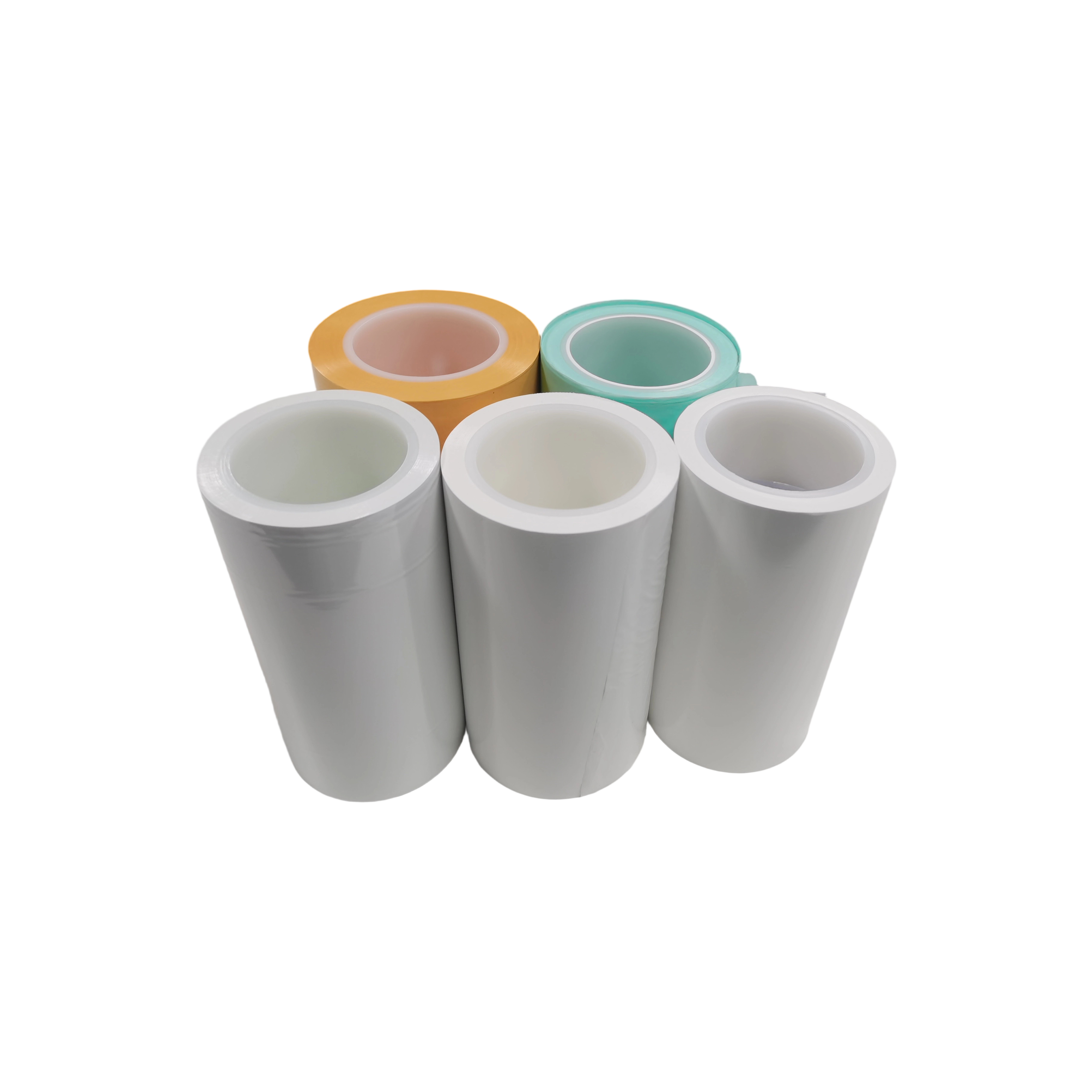
Ultra-heavy Release PE Film is characterized by its exceptional thickness (typically ranging from 6 to 12 mils, compared to standard 1-3 mil films) and enhanced mechanical properties. Unlike conventional release films, it is manufactured using high-density polyethylene (HDPE) or ultra-high molecular weight polyethylene (UHMWPE) formulations with specialized release coatings. Key distinguishing features include:
Enhanced Thickness: Substantially greater gauge than standard films
Superior Tensile Strength: Exceptional resistance to stretching and tearing
Puncture Resistance: Ability to withstand sharp edges and abrasive surfaces
High-Temperature Stability: Maintains integrity under extreme thermal conditions
Chemical Inertness: Resists degradation from aggressive resins and solvents
3. Critical Properties and Technical Advantages
3.1. Exceptional Mechanical Strength
The film's primary advantage lies in its remarkable durability. With tensile strength exceeding 50 MPa in some formulations, it can withstand the substantial mechanical stresses encountered during vacuum bagging, autoclave processing, and compression molding of heavy composite structures.
3.2. Superior Barrier Properties
The high-density polyethylene structure creates an impermeable barrier that prevents resin bleed-through while effectively blocking moisture, air, and other contaminants that could compromise composite integrity. This is particularly crucial for aerospace and marine applications where void content directly affects performance.
3.3. Enhanced Thermal Performance
Ultra-heavy PE films maintain dimensional stability across a wide temperature range (-60°C to 160°C), with specialized formulations extending this range even further. This thermal resistance ensures consistent performance during high-temperature curing processes without melting, shrinking, or degrading.
3.4. Chemical Resistance
The film exhibits exceptional resistance to styrenes, amines, epoxy systems, and other aggressive chemicals used in composite manufacturing. This prevents film degradation and ensures clean release without contamination of the finished part.
3.5. Consistent Release Performance
Advanced silicone or non-silicone release coatings are precision-applied to provide controlled release from various mold surfaces and composite materials. The heavy gauge ensures uniform coating application and consistent performance across the entire film surface.
4. Key Applications in Industrial Sectors
4.1. Aerospace Composite Manufacturing
In aerospace applications, the film is used in the production of primary and secondary structures including wing skins, fuselage sections, and rotor blades. Its ability to withstand autoclave pressures up to 100 psi and temperatures exceeding 135°C makes it indispensable for achieving aerospace-quality composite parts.
4.2. Wind Energy Blade Production
The manufacture of wind turbine blades involves some of the most challenging composite layup processes. Ultra-heavy release film provides the necessary durability to withstand the handling of large-scale structures and the aggressive vacuum bagging pressures required for massive blade sections.
4.3. Marine and Naval Applications
In boat hull and deck manufacturing, the film protects against water intrusion during curing while providing reliable release from female molds. Its UV resistance (in specially formulated versions) provides additional protection during outdoor curing processes.
4.4. Automotive Composite Production
For high-performance automotive components such as carbon fiber body panels, chassis elements, and interior structures, the film ensures defect-free surfaces and consistent quality in both prepreg and infusion processes.
4.5. Industrial Composite Tooling
The film serves as an essential barrier in the production of composite molds and tools, protecting master models and ensuring easy separation of tooling layers during manufacturing processes.
5. Technical Specifications and Performance Standards
Ultra-heavy Release PE Film typically exceeds industry standards including:
ASTM D882: Tensile strength > 45 MPa
ASTM D1709: Dart impact resistance > 500 g
ASTM E96: Water vapor transmission rate < 0.5 g/m²/24h
BMS 5-90: Boeing material specifications for release films
Airbus AIMS standards: Aerospace industry material specifications
6. Manufacturing Process and Quality Control
The production of Ultra-heavy Release PE Film involves sophisticated manufacturing processes:
6.1. Advanced Extrusion Technology
Specialized blown film extrusion equipment capable of handling high-viscosity polyethylene resins and maintaining consistent thickness across wide film widths.
6.2. Precision Coating Application
Computer-controlled coating systems ensure uniform application of release agents across both film surfaces, with thickness variations maintained within ±5%.
6.3. Comprehensive Testing Protocol
Each production batch undergoes rigorous testing including:
Thickness mapping across entire roll width
Release force testing against standard adhesives and resins
Chemical resistance validation
Thermal stability assessment
Mechanical property verification
7. Installation and Handling Considerations
Proper handling of ultra-heavy release film requires specific techniques:
7.1. Specialized Equipment
Heavy-duty dispensers and tension control systems are necessary to handle the substantial weight and stiffness of the film rolls, which can exceed 500 kg for industrial-sized rolls.
7.2. Installation Techniques
Experienced technicians utilize specific methods for large-scale applications, including strategic seam placement, proper overlap techniques, and specialized sealing approaches for vacuum integrity.
7.3. Storage and Handling
The film requires controlled storage conditions (temperature 15-25°C, humidity <60% RH) and careful handling to prevent edge damage and contamination.
8. Future Developments and Industry Trends
The evolution of ultra-heavy release films continues to address emerging industry needs:
8.1. Sustainable Formulations
Development of bio-based polyethylene and recyclable film structures to meet industry sustainability requirements without compromising performance.
8.2. Smart Film Technologies
Integration of sensing capabilities for real-time monitoring of pressure, temperature, and resin flow during composite curing processes.
8.3. Enhanced Performance Characteristics
Ongoing development of films with even higher temperature resistance (up to 200°C) and improved mechanical properties for next-generation composite applications.
8.4. Customized Solutions
Increased offering of application-specific formulations tailored to particular resin systems, processing conditions, and end-use requirements.