

The Unsung Hero of Modern Manufacturing: Unveiling High Transparency Release Film
In the intricate ballet of modern manufacturing, where precision and perfection are paramount, numerous components work silently behind the scenes. Among these, High Transparency Release Film stands out as a critical yet often overlooked enabler of innovation. This specialized material is a cornerstone in industries ranging from composite aerospace components to delicate electronic displays, serving as a protective barrier, a processing aid, and a guarantee of flawless finished products. High Transparency Release Film To understand its significance is to appreciate the hidden engineering that makes contemporary technology possible.
PET Release Film for Packaging and Printing Industry Defining the Core: What is High Transparency Release Film?
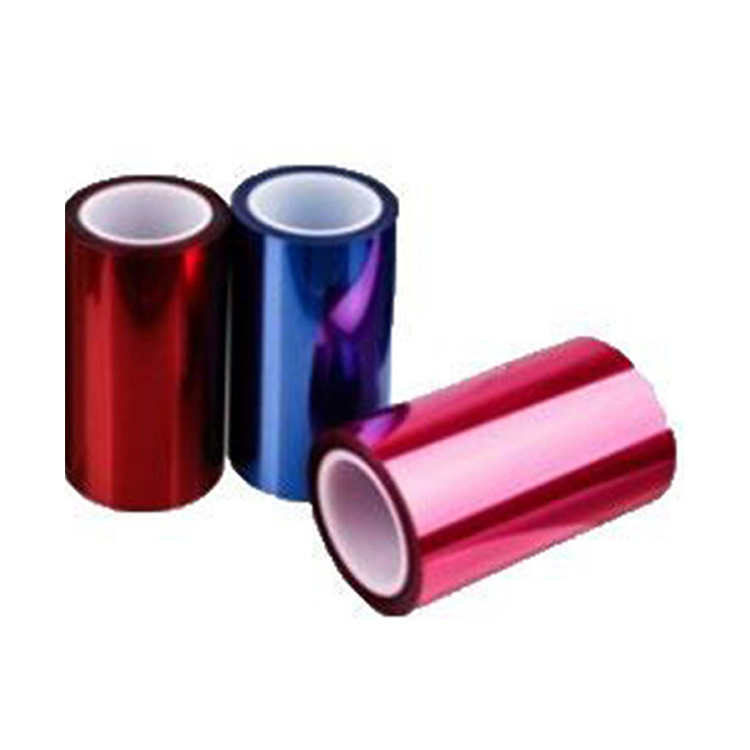
At its essence, a High Transparency Release Film is a thin, engineered plastic film—typically composed of materials like polyethylene terephthalate (PET), polyethylene (PE), or polypropylene (PP)—coated on one or both sides with a precisely formulated release agent, most commonly silicone. This combination bestows upon the film two fundamental and seemingly contradictory properties:
PET Release Film For Electronics Industry High Transparency: The base film is engineered to be optically clear, with extremely low haze. This allows for visual inspection of the material it protects during and after processing. Manufacturers can check for bubbles, contaminants, or imperfections without removing the film, which is crucial for quality control.
Controlled Release: The silicone coating is calibrated to provide a specific, predictable level of adhesion to the film's surface. It is designed to stick to a substrate (like an adhesive or resin) firmly enough to stay in place during rigorous processing steps (e.g., heat, pressure, vacuum) but easily and cleanly peel away without transferring any residue or damaging the sensitive surface beneath.
This delicate balance between tenacious holding and effortless release is the film's defining characteristic and the source of its immense value.
PET Release Film for Tape and Die-Cutting industry The Multifaceted Role in Advanced Applications
The unique properties of high transparency release films make them indispensable across a diverse spectrum of high-tech industries.
Composite Materials & Aerospace: In the production of carbon fiber and fiberglass composites using processes like Vacuum Bag Molding (VBM) and Out-of-Autoclave (OOA) manufacturing, the release film is a critical consumable. It is placed directly onto the uncured resin-impregnated fabric. During the cure cycle under high heat and vacuum pressure, the film contains the resin, prevents it from sticking to the breather fabrics and vacuum bag, and allows air and volatiles to escape through its permeability (in the case of perforated films). The high transparency allows workers to visually ensure the laminate is properly consolidated and free of defects before the irreversible cure is complete.
Pressure-Sensitive Adhesives (PSAs) and Tapes: This is one of the largest application areas. Release films act as protective liners for incredibly sticky adhesives used in tapes, graphic films, medical skin patches, and labels. The film protects the adhesive from contamination, oxidation, and damage during storage, shipping, and die-cutting. When the end-user is ready to apply the adhesive, they simply peel away the crystal-clear liner, which has kept the adhesive surface pristine and ready for immediate bonding.
Electronic Display and Touch Panel Manufacturing: The production of LCDs, OLEDs, and touch sensors involves layers of delicate optical films and adhesive sheets. High transparency release liners are used to handle and apply these layers without introducing scratches, dust, or static charge. Their optical clarity is non-negotiable here, as any distortion or haze in the liner could translate to a defect in the final high-resolution display.
Medical Device Assembly: The medical industry relies on release films for the fabrication of sterile dressings, transdermal drug patches, and biosensors. The requirements are exceptionally stringent, often demanding not only high clarity and consistent release but also biocompatibility, resistance to sterilization methods (like gamma irradiation or ETO gas), and ultra-clean manufacturing environments to prevent particulate contamination.
Key Properties and Engineering Considerations
Not all release films are created equal. Selecting the right film requires careful consideration of several engineered properties:
Release Force: This is measured in grams per inch (g/in) or Newtons per meter (N/m) and can range from "light" or "easy" release to "heavy" or "tight" release. The choice depends on how aggressively the underlying adhesive behaves and the processing forces involved.
Thermal Stability: Films used in composite curing must withstand temperatures exceeding 180°C (356°F) without shrinking, melting, or degrading, which would ruin the part.
Chemical Resistance: The film must be inert and resistant to solvents and chemicals present in resins and adhesives to prevent any interaction or degradation.
Surface Finish: Films can be offered with gloss or matte finishes on the release side, which can be imparted onto the adhesive surface. This is important for aesthetic applications like graphic films.
Anti-Static Properties: In electronic applications, films are often treated to dissipate static charge, preventing the attraction of dust particles that can cause defects.
The Future: Innovation and Sustainability
The evolution of high transparency release film continues. Research is focused on developing films with even higher temperature resistance for next-generation composites, enhanced barrier properties, and smarter films with embedded sensors to monitor cure conditions in real-time.
Furthermore, sustainability is becoming a central focus. The industry is actively investigating bio-based polymer films, solventless silicone coating processes to reduce VOC emissions, and advanced recycling programs for used release liners, moving towards a more circular economy for these essential materials.
In conclusion, High Transparency Release Film is a paradigm of functional material science. It is a silent partner in innovation, providing the flawless surface, protective custody, and controlled separation necessary to manufacture the advanced products that define our world. From the wing of a jetliner to the screen of a smartphone, its clear, unassuming presence is a testament to the fact that the most vital components are often the ones designed to disappear without a trace.