

What materials are important to understand when it comes to release films
Silicone-free release film: It is typically used in conjunction with acrylic adhesive. It effectively isolates the adhesive molecules from penetrating, allowing the double-sided tape to be easily peeled off from the release film.
Fluorine release film: It is used in conjunction with silicone, as silicone and silicone release film are prone to chemical reactions, while fluorine effectively isolates silicone molecules.
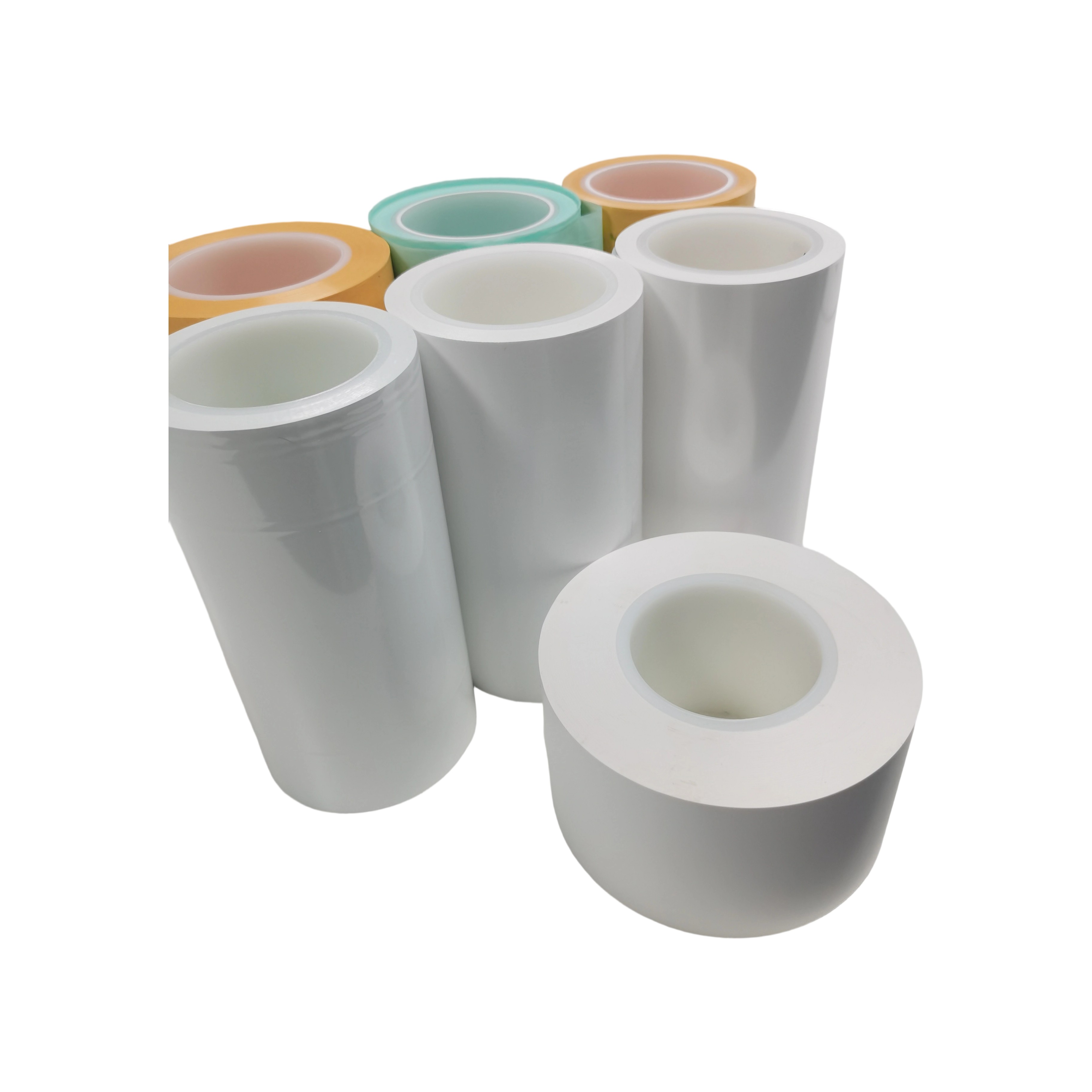
(1) Industry standard ratio 3:1 is for the low release force combination in the production of double-sided tape rolls, while 5:1 is for the release force combination of low-die-cutting products. However, many people misunderstand its meaning. The release film combination ratio is based on the release force generated by the bonding of each type of double-sided adhesive and release film, rather than a general standard release force.
(2) When the single-piece adhesive (or isolated island adhesive) of single-mode cutting products is less than 10 millimeters, the release force ratio of the release film should be increased.
(3) The function of release film is to isolate the penetration of double-sided adhesive molecules and generate release force. However, the thicker the double-sided adhesive layer, the greater the fluidity of the adhesive, and the release force combined with stability will relatively decrease. Therefore, the proportion of release film should also be increased.
(4) Without affecting customer usage, we should strive to increase the proportion of release film combinations and reduce the risk of reverse release.
The main functions of release film include isolation, filling, protection, and ease of peeling. When it comes to die-cutting, release film is the choice as it provides sufficient hardness.
Tag: fluorine release film