

Let's delve into the basics of fluorine-based release films
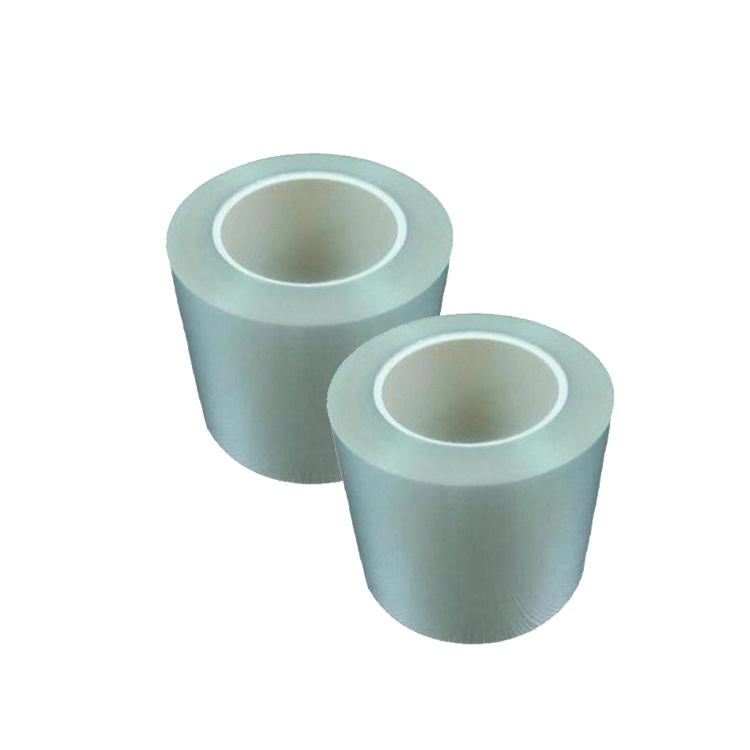
Fluorine release film, also known as fluorine film or fluorine-based film, primarily serves to act as a barrier for sticky items such as silicone tape and PI tape. During production, storage, or transportation, fluorine release film plays a role in protecting adhesive agents from contamination and deterioration. Currently, it is widely used as a carrier for adhesive tapes or adhesive-coated products.
Generally speaking, the technical indicators of fluorine-based release film mainly include: peel force at room temperature, peel force after aging, and residual adhesion rate.
1. Peel force at room temperature: The peel force data obtained through standard testing at room temperature is measured in N/25mm, which can be converted to grams.
Generally, a peeling force of less than 10 grams, or 0.10N/25mm, is referred to as light peeling.
The peeling force below 20 grams, i.e. 0.20N/25mm, is referred to as medium peeling.
The peeling force of 35~45 grams, which is 0.35~0.45N/25mm, is commonly referred to as heavy peeling.
The peeling force of 60~80 grams, which is 0.60~0.80N/25mm, is commonly referred to as heavy peeling.
There is also 1.00N/25mm, which refers to a peeling force of over 100 grams, commonly known as super heavy peeling.
The peeling force of 3~4 grams, which is 0.03~0.04N/25mm, is commonly referred to as "quiet peeling".
2. Residual adhesion rate:
The force required for the second peeling of the fluorine-based release film after the first peeling, and the data obtained after calculating the Teflon high-temperature tape.
3. Aging peeling force:
It refers to the peel force measured after a fluorine-based release film is attached to a product or adhesive tape and subjected to a certain period of time or high temperature. Generally speaking, the peel force data measured after aging is generally slightly higher than that measured at room temperature.
Tag: fluorine release film