

Let me tell you about the precautions for the use and storage of release paper! Release paper (also known as "isolation paper, anti-adhesive paper") is a functional paper with a surface coated with release agent, featuring "low surface energy and anti-adhesion" properties. Its core function is to "carry and protect adhesive materials (such as stickers, tapes, protective films, composite materials)". It can be easily separated from adhesive materials during use without leaving a residual adhesive layer. Its performance revolves around "anti-adhesion effect, temperature resistance, and flatness", and it is widely used in packaging, electronics, building materials, medical, and other fields. Here's an introduction: Release paper avoids migration of release agent: During storage, avoid "high temperature and high humidity" (temperature 15-25℃, humidity 40%-60%). High temperatures will accelerate the migration of release agent to the adhesive layer, causing the adhesive material to fail; release papers with different release forces and types of release agents need to be "stored separately" to avoid cross-contamination (such as mixing fluorine-based release paper with silicone-based release paper, which may lead to silicon migration).
Process protection: During die-cutting/coating, avoid "excessive pressure" (pressure ≤50N/cm²) to prevent deformation of the release paper (poor flatness can lead to uneven coating of the adhesive layer); during high-temperature processing, control "temperature and time" (e.g., processing time ≤30 minutes at 150℃), as exceeding the temperature tolerance range can lead to carbonization and detachment of the release agent.
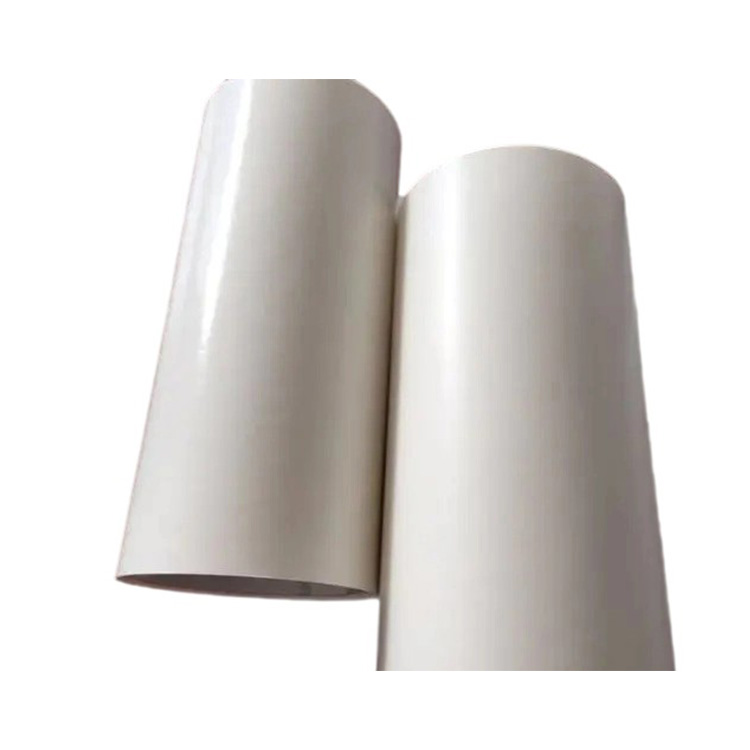
Residual adhesion test: Before batch use, a "sample test" is required: after bonding the adhesive material to release paper (simulating actual storage time, such as 72 hours), the residual adhesion after peeling is tested to ensure it is ≥90% (to avoid the adhesive material losing its effectiveness after batch use).
Recycling and Environmental Protection: Regular release paper (such as kraft paper + silicone release agent) requires "separate recycling" (the release agent needs to be peeled off before recycling the paper); food-grade release paper (such as baking parchment paper) should be "sorted as kitchen waste or recyclable waste" after use to avoid polluting the environment.