

Difference between fluorine-based release film and silicone oil film
PET silicone oil film, also known as silicone oil film or PET release film, is a layer of silicone oil applied on the surface of PET film to reduce the adhesion of the PET film surface and achieve a release effect. The conventional thickness ranges from 25um to 150um. It is available in hot and cold peelable versions and matte finishes. After anti-static and anti-scratch treatment, the product has good adsorption and conformability. It can be divided into single-sided release film and double-sided release film; according to the release force, it can be divided into light release film, medium release film, and heavy release film.
Application scope: PET release film is now widely used in various industries such as packaging, printing, circuit boards, laser anti-counterfeiting, lamination, electronics, sealing material films, reflective materials, waterproof materials, medicine (ointment paper), sanitary paper, adhesive products, die-cutting and punching processing, and more.
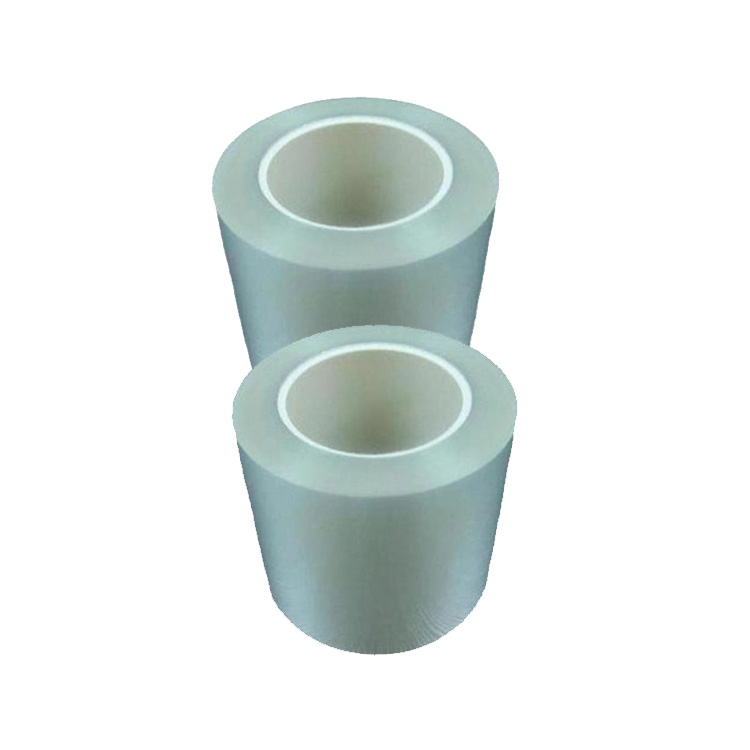
Common characteristics of fluorine-based release film and silicone oil film
① Both are made with PET as the substrate, and the surface of the product is coated with a release substance ranging from 0.2um to 0.6um;
② The surface is smooth and clean, with uniform coating;
③ There are no signs of wrinkling or tearing;
④ Free from defects such as particles, bubbles, and pinholes;
⑤ Small thickness tolerance and high transparency;
⑥ Low thermal shrinkage rate and good flexibility.
If we obtain these two materials, how should we distinguish them? Actually, from the surface, it is difficult to see any difference between fluorine release film and silicone oil film, and their appearance is almost indistinguishable. Therefore, Tubo Online believes that to understand the difference between the two materials, we can analyze them from the following points:
① Fluorine-based release film does not react with silicone rubber surface, and the release force is stable; while silicone oil film will react and cannot be peeled off;
② Price differentiation: Fluorine-based release films are relatively expensive, while silicone oil films are relatively cheaper;
③ For the release force of fluorine film, use MY-2G, and for silicone oil film, use TESA7475 (refer to the manufacturer's standard for specific steps);
④ In terms of the choice of die-cutting materials: generally, silicone tape is paired with fluorine film, while acrylic tape is paired with silicone oil film. Of course, different products may require different materials.
Label: Fluorine-based release film