

Chemically Cross-Linked Polypropylene (PP) Film: Production, Properties, and Applications
Introduction
Polypropylene (PP) films are widely used in various industries due to their excellent chemical resistance, good mechanical properties, and relatively low cost. However, conventional PP films have certain limitations, particularly in terms of thermal stability and mechanical strength at elevated temperatures. Chemical cross-linking of PP films has emerged as an effective method to enhance these properties, creating materials with superior performance characteristics for demanding applications.
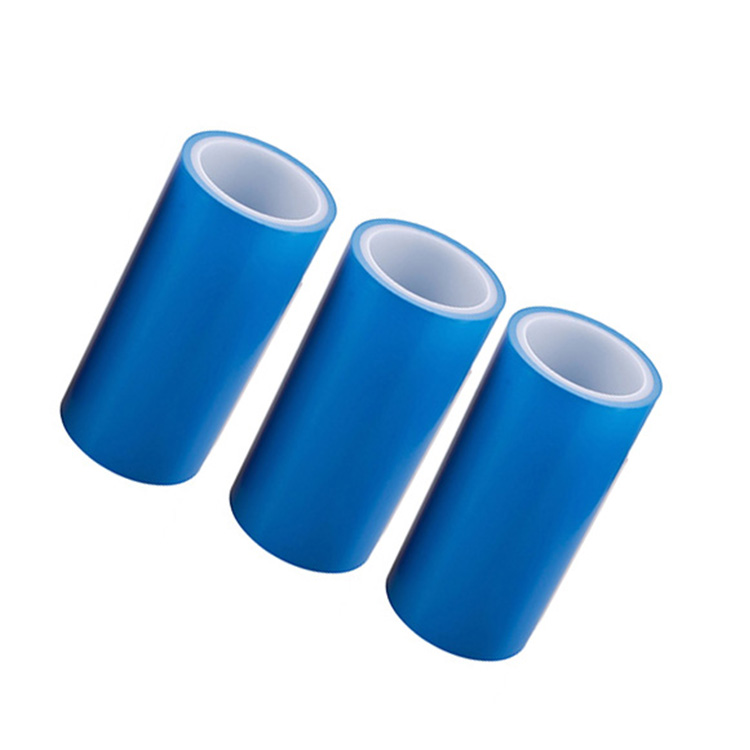
Chemical Cross-Linking of Polypropylene
Fundamentals of Cross-Linking
Chemical cross-linking involves the formation of covalent bonds between polymer chains, creating a three-dimensional network structure. For polypropylene, this process typically requires the use of cross-linking agents or high-energy radiation because PP lacks natural reactive sites for cross-linking.
The cross-linking reaction can be represented as:
text
PP-CH3 + Cross-linker → PP-CH2-X-CH2-PP
(where X represents the cross-linking bridge)
Common Cross-Linking Methods for PP Films
Peroxide-Induced Cross-Linking:
Organic peroxides (e.g., dicumyl peroxide) decompose at elevated temperatures to form free radicals
These radicals abstract hydrogen atoms from PP chains, creating macro-radicals
Combination of macro-radicals leads to C-C cross-links
Silane Cross-Linking:
Uses vinyltrimethoxysilane (VTMS) as a grafting agent
Requires moisture for the hydrolysis and condensation reactions
Forms Si-O-Si bridges between polymer chains
Radiation Cross-Linking:
Uses electron beam or gamma radiation
Directly generates free radicals on PP chains
Requires precise control of radiation dose
Production Process of Chemically Cross-Linked PP Films
Raw Material Preparation
Selection of appropriate PP resin (typically isotactic PP with high crystallinity)
Addition of cross-linking agents (0.5-3% by weight)
Incorporation of co-agents (e.g., triallyl cyanurate) to improve cross-linking efficiency
Addition of stabilizers to prevent degradation during processing
Film Extrusion and Cross-Linking
Melt Compounding:
PP resin is mixed with cross-linking agents in a twin-screw extruder
Temperature control is critical to prevent premature decomposition of peroxides
Film Formation:
The compounded material is extruded through a flat or blown film die
Typical extrusion temperatures: 180-220°C
Cross-Linking Step:
For peroxide systems: heating to 170-200°C to activate cross-linking
For silane systems: exposure to moisture at elevated temperatures
For radiation methods: electron beam treatment after film formation
Post-Treatment:
Annealing to relieve internal stresses
Surface treatment (if needed for specific applications)
Properties of Chemically Cross-Linked PP Films
Enhanced Thermal Properties
Higher heat deflection temperature (up to 150°C compared to 100°C for uncross-linked PP)
Improved dimensional stability at elevated temperatures
Reduced thermal shrinkage
Mechanical Properties
Increased tensile strength (typically 30-50% improvement)
Higher modulus (especially at elevated temperatures)
Improved creep resistance
Enhanced puncture and tear resistance
Chemical Resistance
Superior resistance to solvents and chemicals
Reduced environmental stress cracking
Better resistance to oxidation
Other Characteristics
Lower coefficient of thermal expansion
Reduced permeability to gases and vapors
Improved dielectric properties for electrical applications
Characterization Techniques
Gel Content Analysis:
Measures the insoluble fraction after solvent extraction
Indicates degree of cross-linking
Thermal Analysis:
Differential Scanning Calorimetry (DSC) to study melting behavior
Thermogravimetric Analysis (TGA) for thermal stability
Mechanical Testing:
Tensile tests at various temperatures
Dynamic Mechanical Analysis (DMA)
Spectroscopic Methods:
FTIR to identify chemical changes
NMR for detailed structural analysis
Applications of Chemically Cross-Linked PP Films
Electrical Industry
High-temperature capacitor films
Insulation for wires and cables
Transformer insulation
Packaging
High-barrier food packaging
Sterilizable medical packaging
Retort pouches for ready-to-eat meals
Industrial Applications
High-performance membranes
Geomembranes for civil engineering
Release films for composite manufacturing
Automotive
Under-the-hood components
Battery separators for electric vehicles
High-temperature gaskets and seals
Recent Developments and Future Trends
Nanocomposite Cross-Linked PP Films:
Incorporation of nanoclays or carbon nanotubes
Further enhancement of mechanical and barrier properties
Environmentally Friendly Cross-Linking Systems:
Development of non-toxic cross-linking agents
Bio-based peroxides
Controlled Degradation:
Designing cross-linked PP with controlled lifetimes
Balancing durability with recyclability
Smart Cross-Linked PP Films:
Stimuli-responsive materials
Self-healing capabilities
Challenges and Considerations
Processing Difficulties:
Precise control of cross-linking reaction during processing
Potential for premature gelation
Recyclability:
Cross-linked PP is more difficult to recycle than linear PP
Development of reversible cross-linking systems
Cost Considerations:
Additional processing steps increase production costs
Need for specialized equipment
Property Balance:
Excessive cross-linking can lead to brittleness
Optimization required for specific applications
Conclusion
Chemically cross-linked PP films represent a significant advancement in polymer film technology, offering enhanced properties that expand the application range of polypropylene. While the technology presents certain challenges, ongoing research continues to improve processing methods, develop new formulations, and address environmental concerns. As material requirements become more demanding in various industries, chemically cross-linked PP films are poised to play an increasingly important role in high-performance applications.
The future of this technology lies in the development of more efficient cross-linking systems, better control over the network structure, and the creation of multi-functional materials that combine cross-linking with other modification techniques. With these advancements, chemically cross-linked PP films will continue to replace more expensive engineering plastics in many applications, offering cost-effective solutions without compromising performance.
Content Tags
OCA Release Film
Optical Release Film for Display Panel industry
Optical Release Film for Consumer Electronics industry
Optical Release Film for Automotive Industry
Optical Release Film for Medical industry
Optical Release Film for Optical Component Manufacturing Industry